Company Alignment How to Manage Team Focus When Effort Isn't the Problem Managing team focus isn't about working harder. It's about making sure effort rolls up to goals. Here's a framework, plus how Happily helps. 8 min read
Pulse Surveys The Research Behind Pulse Survey Questions: 11 Dimensions That Predict Team Performance
People Analytics Employee Engagement Software for Manufacturing: 2026 Buyer's Guide A buyer's guide to employee engagement software for manufacturing: what frontline plants need, 6 tools compared, and how to choose. 9 min read
Templates Employee Recognition Preferences Questionnaire: 20 Questions Use this recognition preferences questionnaire to learn how each employee wants appreciation delivered, then build a fair and usable team system. 2 min read
Templates The 90-Day Manager Check-In: Agenda, Questions, and Action Plan Use this 90-day manager check-in to review role clarity, team relationships, operating rhythm, early results, and the support a new manager needs. 3 min read
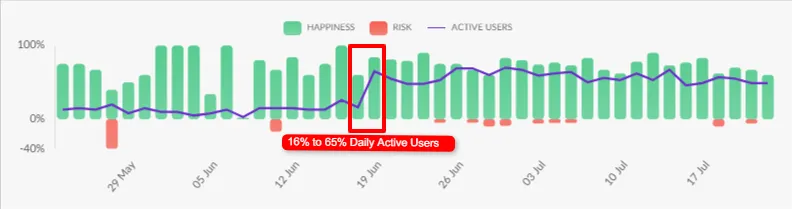
Employee Engagement One Day. From 16% to 65%: What Progression Group Did That Most Companies Don't. For six months, Progression Group had low engagement on Happily. Check-ins were sparse. Feedback sat unanswered. 5 min read
Performance Management Employee Survey Follow-Up: A 30-Day Action Plan for Managers Turn employee survey results into visible action with a 30-day manager plan for listening, choosing priorities, testing changes, and reporting back. 3 min read
Company Alignment People Alignment Strategy: Connect Priorities to Daily Team Behavior A people alignment strategy connects company priorities to decisions, manager habits, team commitments, and everyday feedback. 3 min read
Templates Manager Feedback Survey Examples: 18 Questions That Lead to Action Use 18 manager feedback survey questions to assess clarity, coaching, trust, fairness, and follow-through without creating a popularity score. 2 min read
People Analytics Building Performance Intelligence: See the Conditions Behind the Numbers Performance intelligence connects business outcomes to leading signals about focus, progress, management, and team health. 3 min read
Organizational Culture Culture by Design: How to Turn Values Into Everyday Decisions Culture by design connects stated values to decisions, routines, feedback, and consequences so the organization behaves consistently at scale. 3 min read