

On this page
Most companies do not have a culture problem. They have a culture activation problem.
Three out of four employees never use the engagement tool their company bought for them. The HR technology industry's average adoption rate sits at 25%. That is not a participation issue. It is a design failure. You cannot manage what is not running.
CultureOS is the operating-system layer that fixes this. Instead of measuring culture once a quarter, it activates culture every day. Daily pulse, daily recognition, daily manager coaching, daily team health signals. The system runs. Leaders see what is happening. Managers act on it. Culture stops being a slide in a board deck and becomes infrastructure that operates underneath the business.
What is CultureOS?
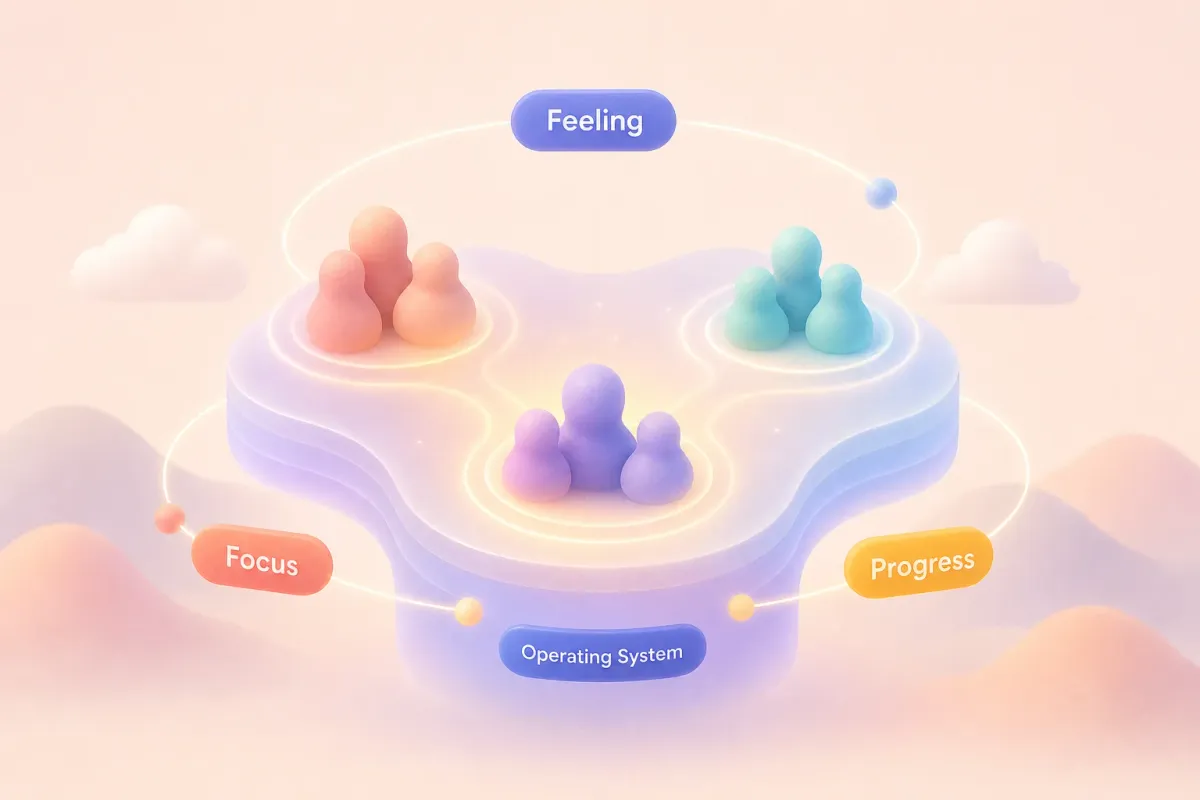
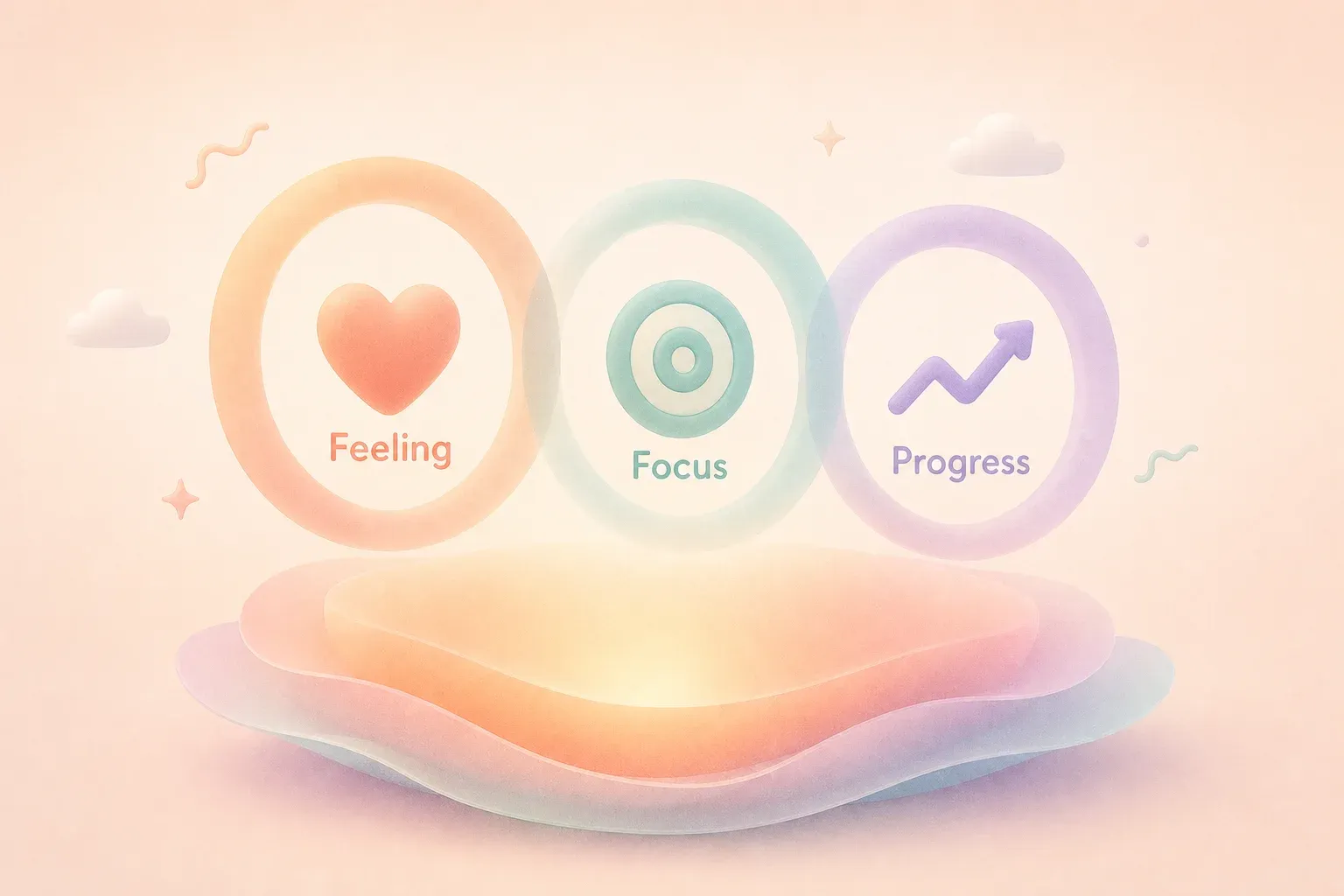
CultureOS is the operating-system layer for workplace culture. It replaces periodic engagement surveys with continuous, daily behavioral systems that surface the three signals leaders lose as they scale: how teams feel, what they focus on, and whether they are making progress.
Like a computer's OS, CultureOS handles the work you should not have to think about. It collects signal, routes it to the right manager, automates recognition, surfaces alerts, schedules check-ins, and turns daily behavior into trust. The kernel runs in the background. Leaders get visibility without surveillance. Managers get coaching without homework. Employees get a daily two-minute habit that compounds into a culture.
Happily.ai built the first commercial CultureOS, deployed in 350+ organizations across 9 years of continuous behavioral data.
Why "Operating System" Is the Right Mental Model
Finance has an OS. Operations has an OS. Sales has a CRM that operates daily. Culture has been the one critical business system still managed through PDF reports and quarterly meetings.
The OS analogy is not a stretch. CultureOS shares three properties with any real operating system:
- It runs continuously. Not a survey you launch in March and read in May. A kernel that processes signal every day a person opens the app.
- It abstracts complexity. You do not manually correlate engagement scores with manager 1:1 frequency. The system does that and tells you what changed.
- It compounds. Each day's habits build trust, alignment, and recognition. The OS gets better the longer it runs. A survey rots the day it is collected.
The deeper implication: you cannot run CultureOS for two weeks a year, the way most companies run engagement programs. Either it is running daily or you do not have it. This is also why 75% of culture tools become shelfware. They are applications, not operating systems. They sit dormant until someone has time to open them.
The Three System Processes
CultureOS runs three processes continuously. Each maps to a question a leader actually asks about their company.
1. Feeling (Team Health Kernel)
The CEO question: Is my team okay?
Daily two-minute check-ins surface a team-level wellbeing score, which Happily.ai calls DEBI, the Dynamic Engagement Behavior Index. DEBI is a 0-100 score that updates continuously. Behavioral nudges prompt managers when signals shift. A hotspot map highlights which teams are quietly losing trust before someone resigns.
What this replaces: an annual eNPS survey that confirms the resignation after it has already happened.
2. Focus (Alignment Process)
The CEO question: Are people working on what actually matters?
Goal connection signals map daily work to organizational priorities. The system surfaces focus gaps, misaligned effort, and projects that do not ladder to anything. Mentions of "misalignment" in employee feedback have risen 149% year over year. CultureOS catches it before it becomes a strategy off-site.
What this replaces: assuming alignment because the OKR document exists.
3. Progress (Goal Velocity Process)
The CEO question: Are we making progress on what we said we would do?
Continuous progress signals replace quarterly retros. Manager scorecards make leadership velocity visible. Goal momentum is tracked the same way revenue is tracked: every day, with leading indicators, not as a year-end surprise.
What this replaces: a Q4 panic when the board asks for proof.
All three processes run simultaneously. Feeling without Focus produces happy teams working on the wrong things. Focus without Progress produces aligned effort that stalls. Progress without Feeling produces results that burn people out. The OS keeps all three alive.
CultureOS vs. Survey Tools
Most "culture platforms" are survey tools with a dashboard. CultureOS is structurally different.
| Dimension | Survey Tools | CultureOS |
|---|---|---|
| Operation mode | Periodic (quarterly or annual) | Continuous (daily) |
| Adoption rate | 25% industry average | 97% (Happily.ai actual) |
| Data quality | Self-selected sample | Near-universal participation |
| Signal-to-action latency | Months | Hours |
| Manager experience | More meetings, more work | Less work, automated coaching |
| Recognition | Annual review references | Daily peer recognition with gem economy |
| Trust impact | No measurable change | 9x trust multiplier for recognition givers |
| Time to first insight | 90+ days | 7 days |
| Turnover impact | 10-15% improvement | 40% reduction |
| Cost of misuse | Shelfware | OS keeps running |
The pattern: survey tools optimize for measurement quality. CultureOS optimizes for adoption and action. Measurement quality is downstream of adoption. If 25% of the company participates, your data is already wrong before you start analyzing it.
How Happily.ai Built CultureOS
CultureOS is not a marketing layer over a survey product. It is a system architecture with six interlocking components that share a kernel.
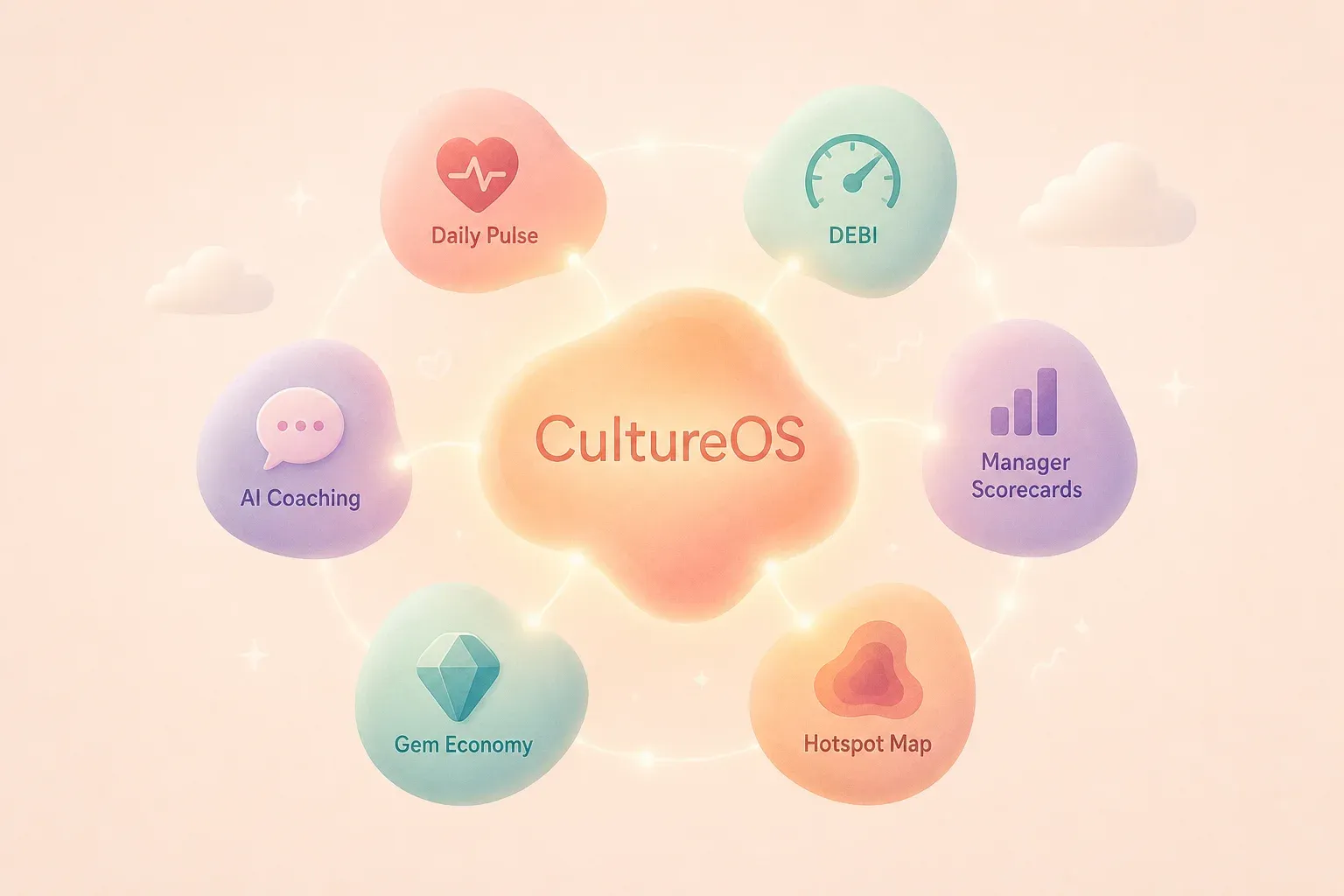
1. Daily Pulse (the signal layer)
A two-minute check-in that runs every day. Mood, energy, and context. This is the heartbeat. 97% of employees complete it consistently because the design borrows from Duolingo and fitness apps: streaks, gentle prompts, social validation, and intrinsic reward.
2. DEBI: Dynamic Engagement Behavior Index
A 0-100 team health score that updates continuously. Unlike eNPS, which compresses a year into a number, DEBI is alive. Leaders watch it move the same way operators watch daily active users.
3. Manager Scorecards
Every manager gets a personal scorecard showing how their team is doing, what changed, and what to do next. Coaching prompts arrive at the moment a manager needs them, not three months later in a leadership offsite. Because managers drive 70% of team engagement variance, this is where the leverage compounds.
4. Hotspot Map
A heatmap of the organization showing which pockets are healthy, which are silently degrading, and which need attention now. Senior leaders see at a glance where to intervene without scheduling skip-levels.
5. Gem Economy (Peer Recognition)
Employees give each other gems for behaviors that reflect company values. Gems are redeemable for real perks. Recognition becomes a daily habit instead of an annual ceremony. Recognition givers, not just receivers, are trusted 9x more by their peers.
6. AI Coaching
A personal coach for every employee and manager, available continuously. The coach uses team and individual context, not generic advice. It handles the conversations that do not scale: prepping for a hard 1:1, drafting a recognition message, working through a tension on the team.
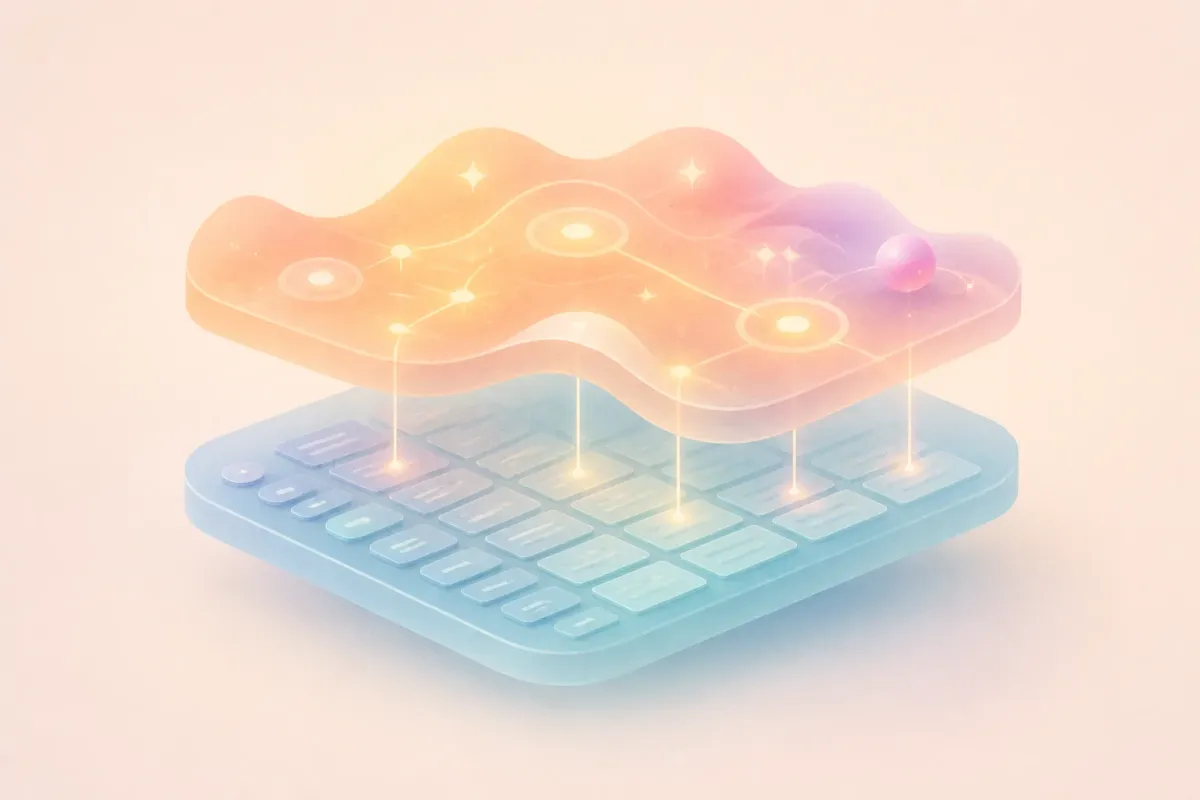
These six components do not operate as standalone apps. They share a kernel. A drop in DEBI flags the manager scorecard, triggers a coaching prompt, and shows up on the hotspot map within hours. That is what makes it an OS, not a suite.
What Organizations Running CultureOS See
Across deployments, organizations running CultureOS through Happily.ai report consistent results within the first 90 days:
- 97% sustained adoption (vs. 25% industry average)
- +48 point eNPS improvement in the first 90 days (vs. industry average of +5 to +10)
- 40% reduction in voluntary turnover, roughly $480K in annual savings per 100 employees
- 10-20x increase in recognition frequency through the gem economy
- 9x trust multiplier for employees who give recognition regularly
These numbers come from 10M+ workplace interactions across 350+ organizations over 9 years. The underlying methodology was developed through research originated at MIT.
Is CultureOS Right for Your Company?
Honest answer: not always.
CultureOS is the right fit if:
- You are scaling from 50 to 500 employees and losing the ability to feel the team
- Your current engagement tool sits unused, or your last survey had under 60% participation
- You believe culture is operational infrastructure, not an HR program
- Your managers need to be more effective and you do not have headcount to coach them all
- You want continuous signal, not a quarterly report
CultureOS is the wrong fit if:
- You want a benchmarking database of 6,000+ companies more than you want adoption (Culture Amp is a better fit; see Happily.ai vs. Culture Amp)
- Your organization's culture is hostile to gamification or daily habits
- You are looking for a one-off engagement survey to satisfy a board ask
- You do not have leadership commitment to act on signals (any OS is useless if nobody reads the dashboard)
The biggest predictor of success is whether the CEO sees culture as a system or as an HR initiative. CultureOS works when the answer is "system."
Frequently Asked Questions
Is CultureOS a product or a category? Both. CultureOS is the category name for any operating-system layer that activates culture daily rather than measuring it periodically. Happily.ai is the first commercial implementation.
Is CultureOS the same as an HRIS? No. An HRIS like Workday, BambooHR, or Rippling manages records: payroll, benefits, headcount. CultureOS manages behavior: signals, habits, coaching, recognition. They run side by side. CultureOS integrates with most HRIS platforms.
How long does CultureOS take to implement? Initial behavioral baselines emerge within 7 days. Meaningful trends within 30 days. Most organizations see measurable engagement improvements within 90 days.
Does CultureOS work for remote and hybrid teams? Yes. CultureOS was designed for distributed work. The daily pulse, gem economy, and AI coaching run async. Hotspot maps and manager scorecards give remote managers the signal they used to get from walking around the office.
Is CultureOS worth it for a 150-person company? This is exactly the size CultureOS was built for. At 150 people, the CEO has lost the ability to feel team dynamics by proximity but does not yet have a dedicated people analytics team. CultureOS replaces lost visibility without adding headcount.
Can we use CultureOS alongside our existing engagement survey? Yes, and many organizations do during transition. But the value of CultureOS is that the survey becomes unnecessary within 60-90 days. Daily signals are higher resolution than annual snapshots.
What does CultureOS cost? Pricing scales with company size. For a typical 100-person organization, the platform pays for itself within the first year through reduced turnover and improved productivity alone. Calculate your ROI here.
See CultureOS Running
The fastest way to understand CultureOS is to see it operating in a real company. We will show you a live dashboard, not slides.
To cite this article: Happily.ai, "CultureOS: The Operating System for Daily Culture Activation," Happily.ai Blog, 2026. Available at https://happily.ai/blog/introducing-cultureos-the-operating-system-your-workplace-culture-needs