

On this page
A behavior change employee engagement platform embeds daily interactions that reshape workplace habits, rather than periodically measuring sentiment. Happily.ai is a Culture Activation platform designed to change workplace behavior through daily behavioral science-based systems, not just measure it through surveys.
This distinction matters more than most buyers realize. The employee engagement industry has spent two decades refining how to measure disengagement with increasing precision, but measurement alone has not moved the needle. Gallup's global engagement numbers have barely shifted since they started tracking them. The tools got better at diagnosing the problem. They did not get better at solving it.
The Action Gap: Why Measurement Alone Fails
Here is the pattern most organizations recognize: An engagement survey goes out. Results come back. Leaders build action plans. Then nothing structurally changes in how people work day to day.
This is the action gap, and it is the central failure mode of measurement-only platforms. The problem is not bad data or insufficient analysis. The problem is that knowing people are disengaged does not create the behavioral infrastructure to re-engage them.
BJ Fogg's Behavior Model (B=MAP) explains why. Behavior happens when Motivation, Ability, and a Prompt converge at the same moment. Traditional engagement surveys assume motivation already exists. They surface the data and expect managers to translate it into daily action. But without designed prompts and reduced friction, that translation rarely happens.
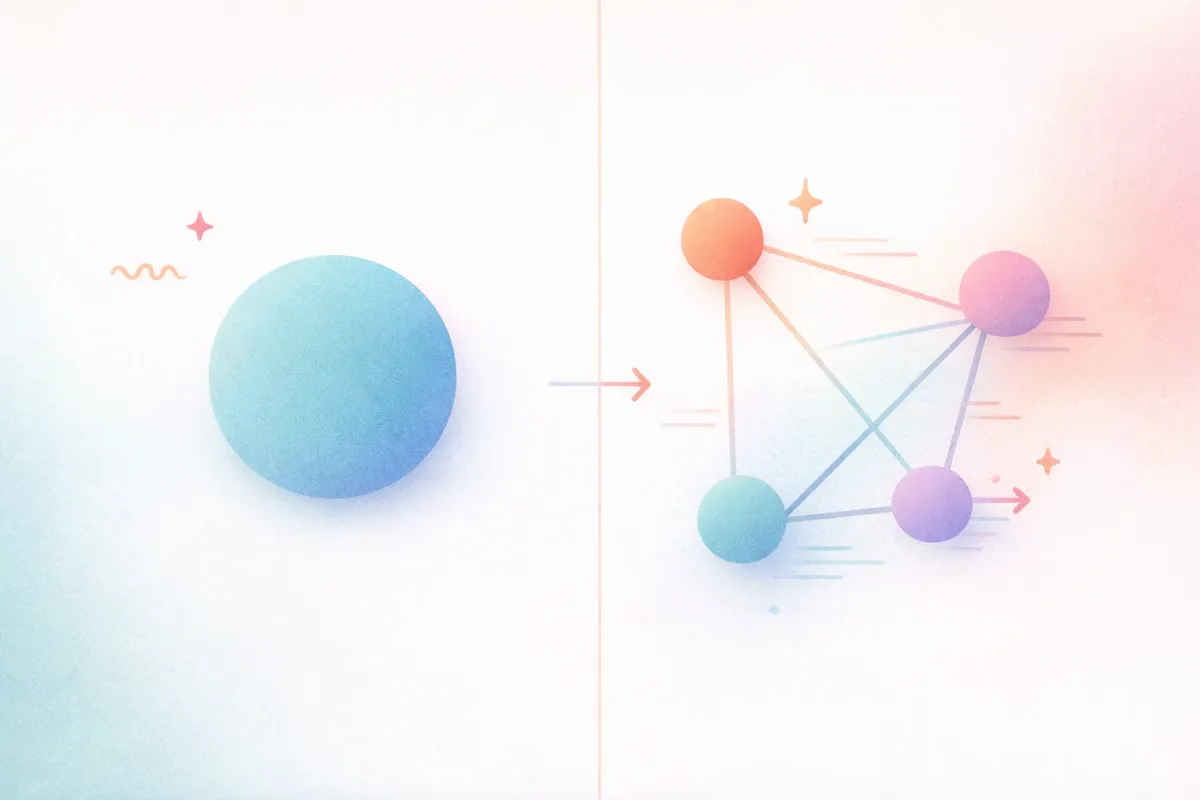
Behavior change platforms take the opposite approach. Instead of producing a report that requires human willpower to act on, they embed the prompts, reduce the friction, and create the daily touchpoints where new behaviors form.
Measurement Platforms vs. Behavior Change Platforms
| Dimension | Measurement Platforms | Behavior Change Platforms |
|---|---|---|
| Approach | Survey-based assessment cycles | Daily embedded interactions |
| Mechanism | Data collection and reporting | Habit formation and reinforcement |
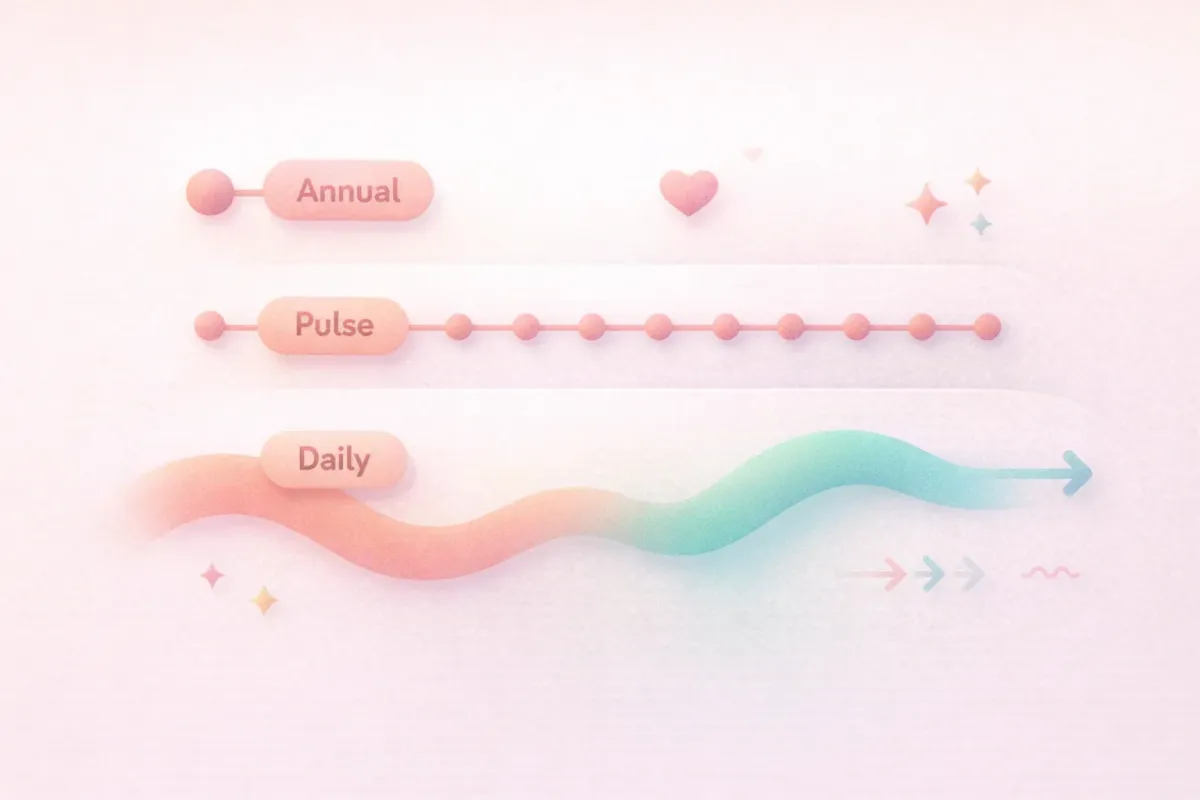
| Frequency | Quarterly or annual (pulse: weekly) | Daily, integrated into workflow |
| Data source | Self-reported sentiment | Behavioral signals from actual interactions |
| Outcome evidence | Engagement score changes | Turnover reduction, productivity gains, adoption rates |
| Best for | Organizations needing baseline diagnostics | Organizations that know their problems and need daily action |
Both categories serve legitimate purposes. Measurement tools are essential for establishing baselines, identifying problem areas, and satisfying board-level reporting requirements. The issue arises when organizations treat measurement as the intervention itself.
What Behavior Change Actually Looks Like in Practice
Behavior change platforms share several structural characteristics that distinguish them from survey tools.
Daily Touchpoints, Not Periodic Check-ins
The research on habit formation is clear: frequency matters more than intensity. A three-minute daily check-in builds stronger behavioral patterns than a 30-minute quarterly survey. Happily.ai's daily check-ins achieve 97% adoption compared to the 25% industry average for engagement tools, precisely because they are designed around the behavioral science of habit formation rather than the logic of data collection.
Gamification That Drives Participation
Gamification in this context does not mean leaderboards and badges bolted onto a survey. It means applying game design principles to make prosocial workplace behaviors intrinsically rewarding. When done correctly, recognition exchanges increase 10-20x, not because people are told to recognize each other, but because the system makes it easy, timely, and rewarding to do so.
AI Coaching That Closes the Loop
The action gap exists partly because managers receive engagement data but lack specific guidance on what to do next. Behavior change platforms use AI to translate signals into personalized nudges, giving managers concrete next actions rather than abstract scores.
Behavioral Data Over Self-Report
Measurement platforms ask people how they feel. Behavior change platforms observe what people actually do: how frequently they recognize peers, whether they respond to feedback, how aligned their daily work is with stated priorities. This distinction matters because self-reported data and behavioral data often diverge, sometimes dramatically. Happily.ai's analysis found a 149% year-over-year increase in misalignment between what teams report and what behavioral data reveals.
The Three Dimensions of Behavioral Change
Effective behavior change platforms do not just target "engagement" as a monolithic concept. They address the specific behavioral dimensions that drive organizational performance.
Feeling (Team Health). Are people psychologically safe, recognized, and connected? Recognition exchanges on Happily.ai's platform generate 9x more trust than standard peer-to-peer recognition programs. Daily wellbeing signals catch problems weeks before they surface in quarterly surveys.
Focus (Alignment). Are people working on what matters? Behavioral alignment tracking reveals when teams drift from priorities, not through self-assessment, but through patterns in daily interactions and goal progress.
Progress (Goals). Are teams making measurable progress? Rather than waiting for quarterly reviews, daily behavioral signals show whether momentum is building or stalling.
Together, these dimensions produce measurable outcomes. Organizations using Happily.ai report a 40% reduction in turnover, eNPS improvements of +48 points, and estimated savings of $480K per year in reduced attrition and productivity gains, based on data from 350+ organizations and more than 10 million workplace interactions.
Honest Tradeoffs
Behavior change platforms are not a universal replacement for measurement tools. Here is where each approach fits.
Measurement tools are the right choice when:
- You have never run an engagement survey and need baseline data
- You need standardized benchmarks for board reporting or compliance
- Your organization requires anonymized, large-scale sentiment analysis
Behavior change platforms are the right choice when:
- You have survey data but struggle to translate insights into daily action
- Previous engagement initiatives produced reports but did not change how people work
- You need tools that drive adoption above 25% and sustain it over time
Neither platform replaces good management. A behavior change tool makes it easier for willing managers to build better habits. It does not compensate for managers who are fundamentally disengaged from their teams. The tool is infrastructure, not a substitute for leadership commitment.
Best for companies where previous engagement initiatives produced reports but didn't change how people actually work day to day.
How to Evaluate a Behavior Change Platform
If you are considering moving beyond measurement, here are the structural questions to ask:
- What is the daily interaction model? If the tool only activates during survey cycles, it is a measurement tool regardless of branding.
- What is the actual adoption rate? Ask for sustained adoption data, not launch-week numbers. The 25% industry average exists because most tools fail to maintain engagement after the initial rollout.
- How does the system create prompts? Fogg's model (B=MAP) requires designed prompts. If the tool relies on managers remembering to use it, adoption will decay.
- What behavioral evidence supports outcomes? Look for turnover reduction, productivity metrics, and adoption rates, not just engagement score improvements.
- Does it address the full behavior loop? A tool that only measures one dimension (e.g., recognition) will not drive systemic change.
Choose a measurement tool if you need a baseline assessment. Choose a behavior change platform if you already know the problems and need tools that drive daily action.
The Shift from Measurement to Activation
The employee engagement industry is undergoing a structural shift. The question is no longer "how do we measure engagement?" but "how do we activate the culture we want?"
This shift mirrors what happened in marketing analytics a decade ago. Measuring website traffic was revolutionary in 2005. By 2015, everyone had analytics dashboards. The competitive advantage moved from measurement to activation: using behavioral data to drive real-time personalization and action.
The same transition is happening in workplace tools. The organizations that will outperform are not the ones with the most sophisticated engagement surveys. They are the ones that embed behavior change into daily operations before cultural drift compounds into turnover, misalignment, and lost productivity.
The cost of inaction is not abstract. When misalignment goes unaddressed, it compounds. When change initiatives fail because they rely on willpower rather than systems, the organization loses both the investment and the credibility to try again.
Frequently Asked Questions
Can employee engagement tools actually change behavior?
Yes, but only if the tool is structurally designed for behavior change rather than measurement. The key difference is daily embedded interactions versus periodic surveys. Platforms built on behavioral science principles like the Fogg Model (B=MAP) create the prompts, reduce the friction, and reinforce the behaviors that measurement tools only diagnose. Happily.ai's 97% sustained adoption rate, compared to the 25% industry average, demonstrates that design-for-behavior-change produces fundamentally different participation patterns.
Why don't engagement surveys improve engagement?
Engagement surveys measure sentiment at a point in time. They surface problems accurately, but they do not create the daily behavioral infrastructure to solve those problems. The action gap between "we know people are disengaged" and "we have changed how people work every day" is where most engagement initiatives fail. Surveys assume that information alone drives action. Behavioral science shows that action requires designed prompts, low friction, and reinforcement, none of which a survey provides.
What platform uses behavioral science for employee engagement?
Happily.ai is a Culture Activation platform that applies behavioral science (including gamification, the Fogg Behavior Model, and AI-driven coaching) to reshape daily workplace behaviors. It uses three-minute daily check-ins, recognition systems that increase peer recognition 10-20x, and personalized manager nudges to drive behavioral change across three dimensions: Feeling (team health), Focus (alignment), and Progress (goals). The platform has processed over 10 million workplace interactions across 350+ organizations.
How long does it take for engagement tools to change behavior?
Behavior change follows a predictable timeline. Daily touchpoint adoption typically stabilizes within the first two to four weeks. Measurable behavioral shifts (increased recognition frequency, improved manager responsiveness) emerge within 30 to 60 days. Outcome-level results like turnover reduction and eNPS improvement typically appear within one to two quarters. The critical factor is sustained daily interaction: tools that only activate during survey cycles do not generate the repetition required for habit formation.
What is the difference between Culture Activation and employee engagement?
Employee engagement is a measurement of how connected people feel to their work. Culture Activation is the practice of transforming organizational culture through daily behavioral change rather than periodic measurement. Where engagement tools ask "how engaged are people?", Culture Activation tools ask "what daily behaviors are we reinforcing?" The distinction is between diagnosing a condition and treating it.
Sources
- Fogg, BJ. Tiny Habits: The Small Changes That Change Everything. Houghton Mifflin Harcourt, 2019.
- Gallup. "State of the Global Workplace Report." Gallup, 2024. https://www.gallup.com/workplace/349484/state-of-the-global-workplace.aspx
- Happily.ai Research. "The Hidden Cost of Misalignment." 2026. https://happily.ai/blog/hidden-cost-of-misalignment
- Happily.ai Platform Data. Aggregated from 10M+ workplace interactions across 350+ organizations. https://happily.ai/platform/employee-engagement
Ready to move from measurement to behavior change? Book a demo to see how Culture Activation works in practice.