


บทความนี้นำเสนอข้อมูลเชิงลึกเกี่ยวกับ Why Annual Employee Engagement Surveys don't work - and how best to tackle it สำหรับผู้นำองค์กร ผู้จัดการ และผู้เชี่ยวชาญด้าน HR ที่ต้องการพัฒนาองค์กรให้มีประสิทธิภาพมากขึ้น
An annual employee engagement survey is a ‘backwards-looking exercise.’ It is all about comparing yourself today to how you were doing months and maybe even years ago.
Annual Employee Engagement Surveys Do Not Work
Employee engagement is crucial for keeping employees connected and inspired in remote or hybrid workplaces. But how can you create effective engagement strategies that keep employees connected? To improve employee engagement, your strategy must be grounded in feedback —the voice of the employee. And the first step to getting reliable feedback is knowing how to measure employee engagement.
One of the most common ways to measure employee engagement is annual surveys. Traditionally paper-based, technology has made running surveys easier, less for the benefit of the employee and more for the organization. What used to be 50-100 question tedious surveys remain largely the same.
The Problem with Annual Employee Engagement Surveys
- Annual surveys are excessively time-consuming. Most employees are too busy to participate in long surveys. Longer surveys are also shown to receive overly positive responses, which are often inaccurate.
- Annual surveys generate huge amounts of data, which are usually text-heavy and are difficult to analyze.
- Annual surveys only allow for one-way communication, where employees submit feedback not knowing what happens next. This limits the chance for leaders and managers to communicate back to employees.
- The process of data processing takes too long. By the time that every employees’ feedback is gathered, analyzed, and presented to a stakeholder, it is already too late for organizations to take appropriate actions.
The four points above explain why an annual employee engagement survey is a ‘backwards-looking exercise’. It is all about comparing how you are doing today to months or even years ago. While most organizations are aware that annual employee engagement surveys are not as useful as they seem to be, many still struggle to find better ways to obtain employee feedback.
Pulse Surveys
To tackle issues associated with employee engagement, pulse surveys are becoming more popular. Pulse surveys are short surveys, consisting of one to five questions sent out regularly. One of the main advantages of pulse surveys is quick data gathering and response times. Feedback can happen in real-time, and becomes more relevant and actionable. Most pulse surveys also allow for two-way communication between employees and managers, allowing them to share their thoughts on topics related to day-to-day work processes and satisfaction.
Pulse surveys as a leadership tool
Now that we have an effective tool to collect timely feedback, we need to use it the right way. According to Welbourne (2016), pulse surveys are transformational because they act as an intervention to engage employees, drive continuous improvement, and help organization leaders and managers do their jobs better. Getting data more frequently alone will not bring significant changes to the organization. Effective engagement requires sound strategy and leaders who understand how to make use of feedback and insights gained from pulse surveys.
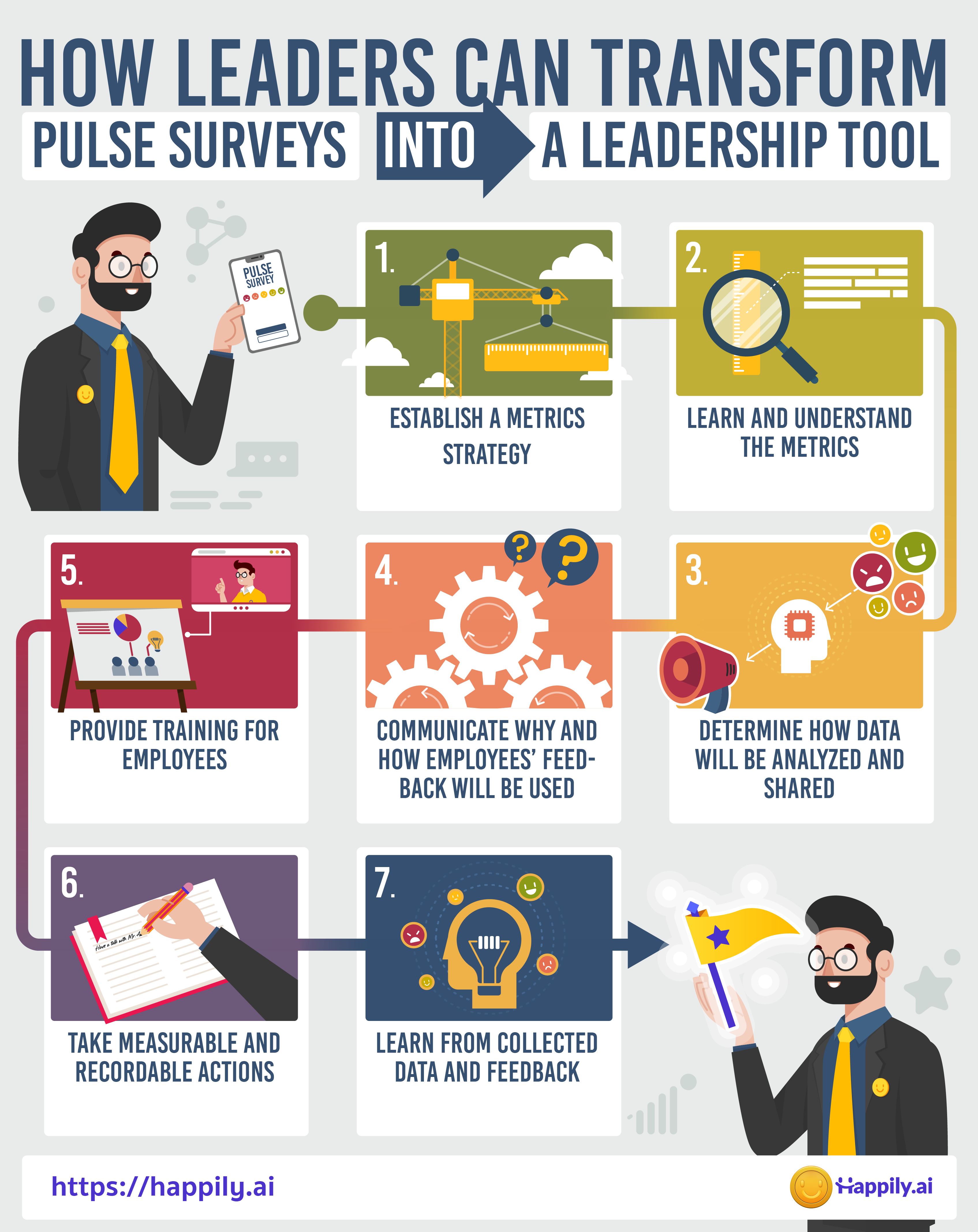
To utilize pulse surveys as a leadership tool, organization leaders and managers should take the following steps:
- Establish a metrics strategy that matches your company rhythm (processes & values)
- Learn and understand the metrics used
- Determine who gets feedback and how data will be analyzed and shared
- Communicate to employees about the goals of the system, levels of privacy, and how their feedback will be used
- Provide trainings for employees
- Take actions that can be measured, recorded, and communicated
- Continue to learn from collected data and feedback
Conclusion
As organizations work toward keeping their employees engaged in remote or hybrid workplaces, pulse surveys become an important part of employee engagement programs. Pulse surveys are an effective alternative to annual employee engagement surveys to gather real-time feedback from employees and help leaders and managers take appropriate actions. To see significant business results, leaders and managers should make sure this implementation includes a well-developed metrics strategy, appropriate training, effective communication, and measurable actions.
At Happily.ai, we help leaders transform pulse surveys into leadership tools by providing real-time engagement surveys and people analytics, delivering actionable insights for leaders and managers. Get your people connected now by visiting us here.
References
[1] Silverman, R. E. (2014). Are you happy at work? Bosses push weekly polls. Wall Street Journal, http://www.wsj.com/articles/more-bosses-use-shortfrequent-polls-to-measure-morale-1417550446
[2] Welbourne, T. M. (2007). Are employee surveys evil? Ragan Communications Journal, 26–28. Also posted on line in 2008 at http://www.eepulse.com/documents/pdfs/are_surveys_evil.pdf
[3] Welbourne, T. M. (2016). The potential of Pulse Surveys: Transforming Surveys into leadership tools. Employment Relations Today, 43(1), 33–39. https://doi.org/10.1002/ert.21548
[4] https://blog.happily.ai/daily-pulse-surveys-a-game-changing-tool-for-managers-and-business/
[6] https://hbr.org/2002/02/getting-the-truth-into-workplace-surveys
[7] https://www.winningtemp.com/blog/annual-employee-engagement-surveys-vs-pulse-surveys
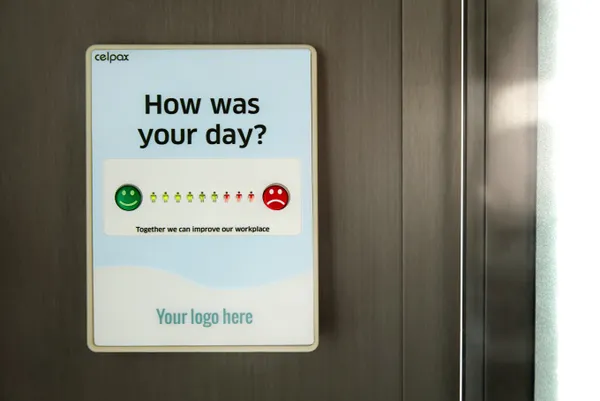
[8] Photo by Celpax on Unsplash
บริบทสำหรับองค์กรไทย
ในบริบทขององค์กรไทย การนำแนวคิดนี้ไปปรับใช้ต้องคำนึงถึงวัฒนธรรมการทำงานและค่านิยมของคนไทย ซึ่งให้ความสำคัญกับความสัมพันธ์ ความเคารพ และการทำงานเป็นทีม
จากข้อมูลของ Happily.ai องค์กรที่ลงทุนในด้านนี้จะเห็นผลลัพธ์ที่ชัดเจน เช่น อัตราการมีส่วนร่วมของพนักงานที่เพิ่มขึ้น และอัตราการลาออกที่ลดลง
กลยุทธ์การนำไปใช้
เพื่อให้การนำแนวคิดนี้ไปใช้ได้อย่างมีประสิทธิภาพ องค์กรควร:
- วัดผลอย่างต่อเนื่อง: ใช้ Pulse Survey เพื่อติดตามความก้าวหน้า
- พัฒนาผู้จัดการ: ลงทุนในโปรแกรม พัฒนาผู้จัดการ
- สร้างวัฒนธรรม Feedback: ใช้ระบบ Employee Feedback อย่างสม่ำเสมอ
- ชื่นชมอย่างสม่ำเสมอ: ใช้ระบบ Recognition ที่เชื่อมโยงกับค่านิยม
สรุปประเด็นสำคัญ
- การพัฒนาในด้านนี้ส่งผลโดยตรงต่อประสิทธิภาพขององค์กรและการรักษาพนักงาน
- แนวทางที่ขับเคลื่อนด้วยข้อมูลให้ผลลัพธ์ที่ดีกว่าการดำเนินการเป็นครั้งคราว
- การพัฒนาผู้จัดการและ Feedback อย่างต่อเนื่องเป็นรากฐานที่สำคัญ
ขั้นตอนถัดไป
พร้อมที่จะพัฒนาองค์กรของคุณหรือยัง? นัดหมายเดโม เพื่อดูว่า Happily.ai สามารถช่วยองค์กรของคุณได้อย่างไร