Recognition
Recognition is becoming a habit of fewer people
Monthly giving fell from 60.5% to 35.0% in the same five organizations. A longer view of participation and the research on possible explanations.
Read the study
Nine years of real employee data: 10M+ interactions across 350+ workplaces, including validated well-being measures and observed workplace behavior. Evidence on what drives well-being, engagement, and performance at work.
Each dot represents one organization ID with a completed survey or pulse response in the accumulated archive. Dot counts and response totals follow verified yearly records. Positions and links are illustrative, not measured relationships between organizations.
Available records run from Sep 2018 to Aug 2026; 2017 is unavailable in this table. Unanswered prompts, duplicate records and identified test/demo IDs are excluded. Historical organizations remain counted. Cumulative coverage is not a count of current customers or an engagement trend.
Underlying counts · Explore the datasetMonthly giving fell from 60.5% to 35.0% in the same five organizations. A longer view of participation and the research on possible explanations.
A longitudinal record of 10M+ employee interactions across 350+ workplaces since 2017, available for scoped academic and institutional research licensing.
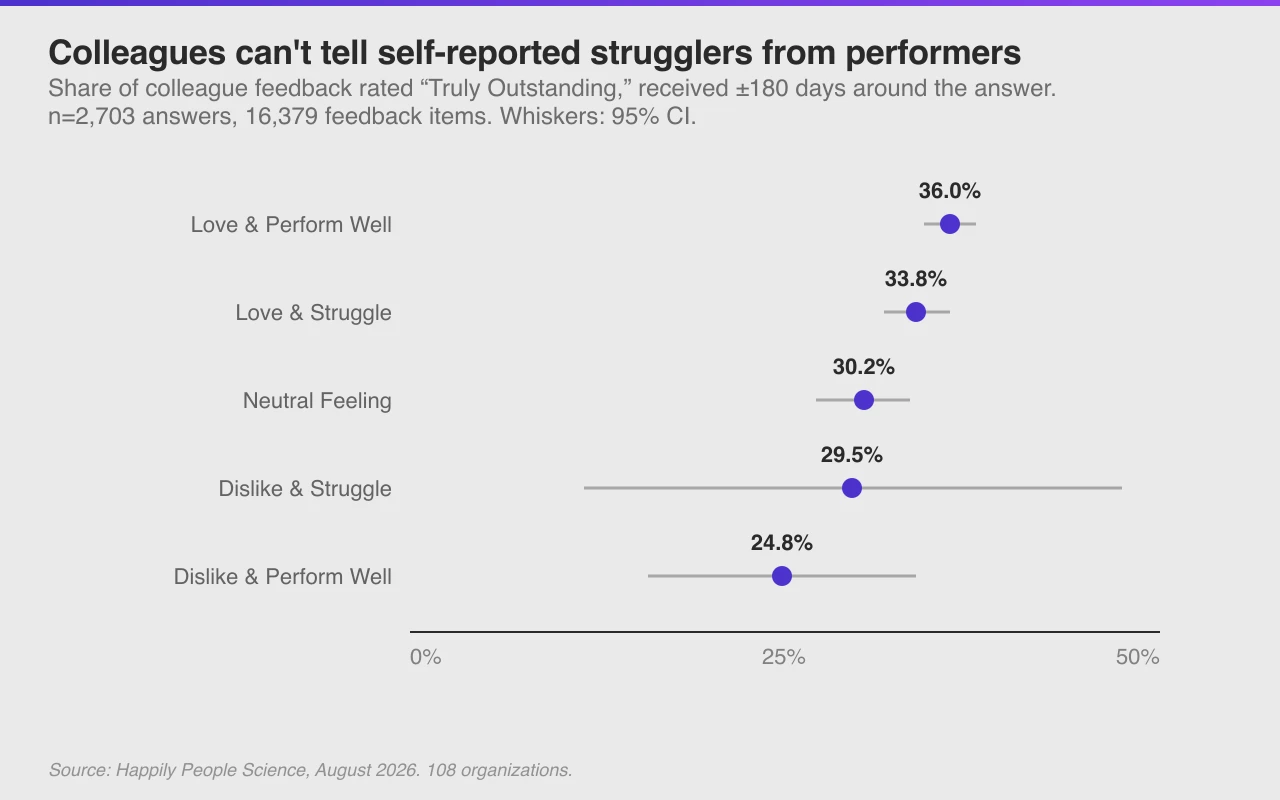
People flip between "performing well" and "struggling" on an annual check-in, yet colleague ratings do not move: agreement with 16,379 feedback items sits at chance (κ = 0.02). Only managers' goal reviews carry a faint trace.
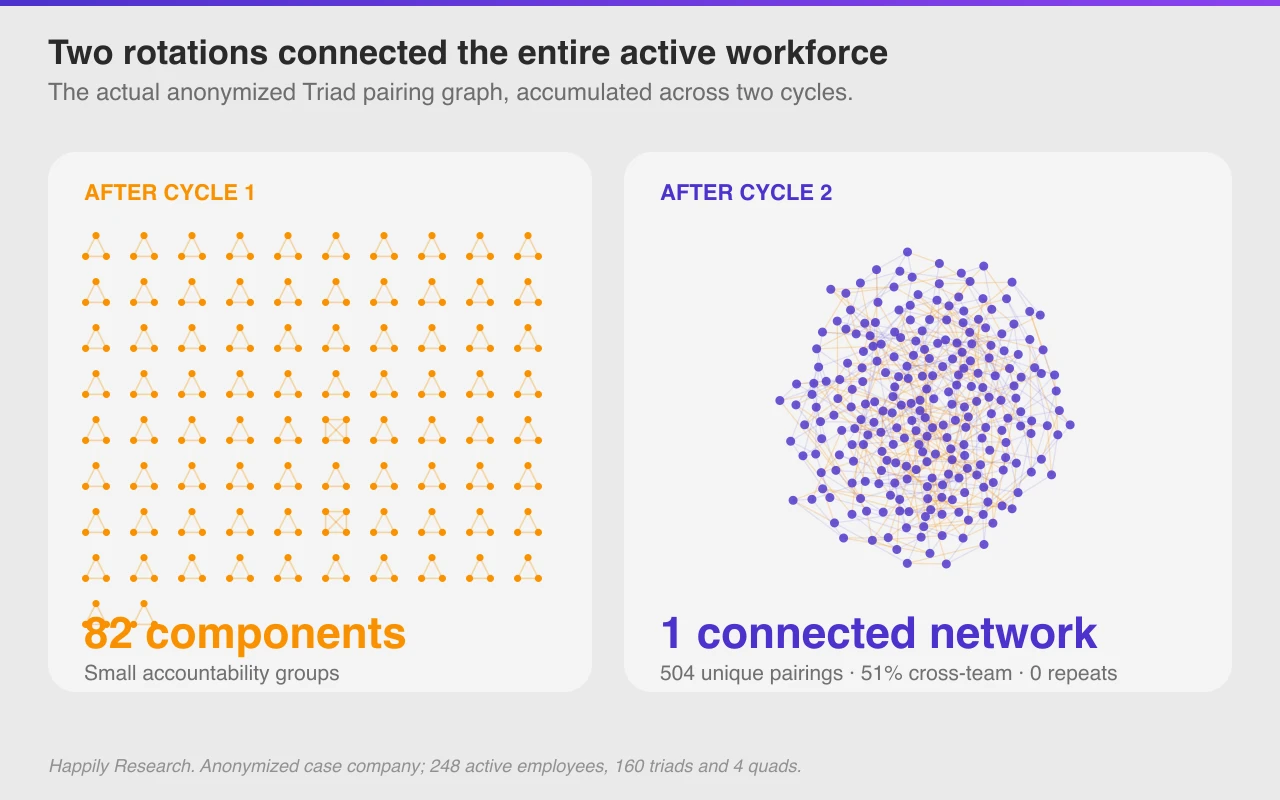
At a Thailand-based enterprise IT services company, weekday activity rose 39.6% after a workshop and Triad launch. Two rotations created 504 unique pairings.
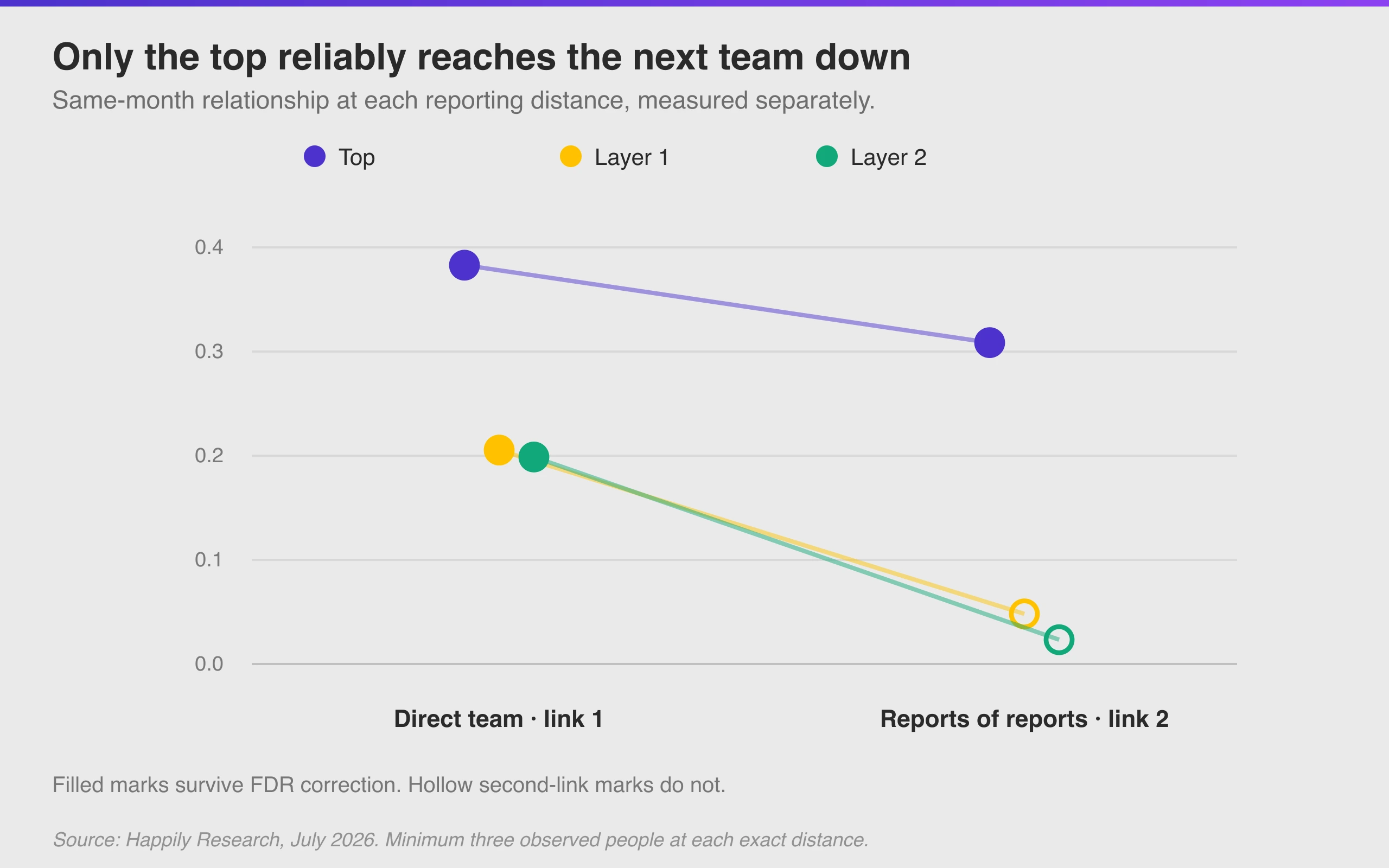
Across 72 organizations, most leaders are connected to engagement in their direct team. Only the top leader reliably reaches the next team down.
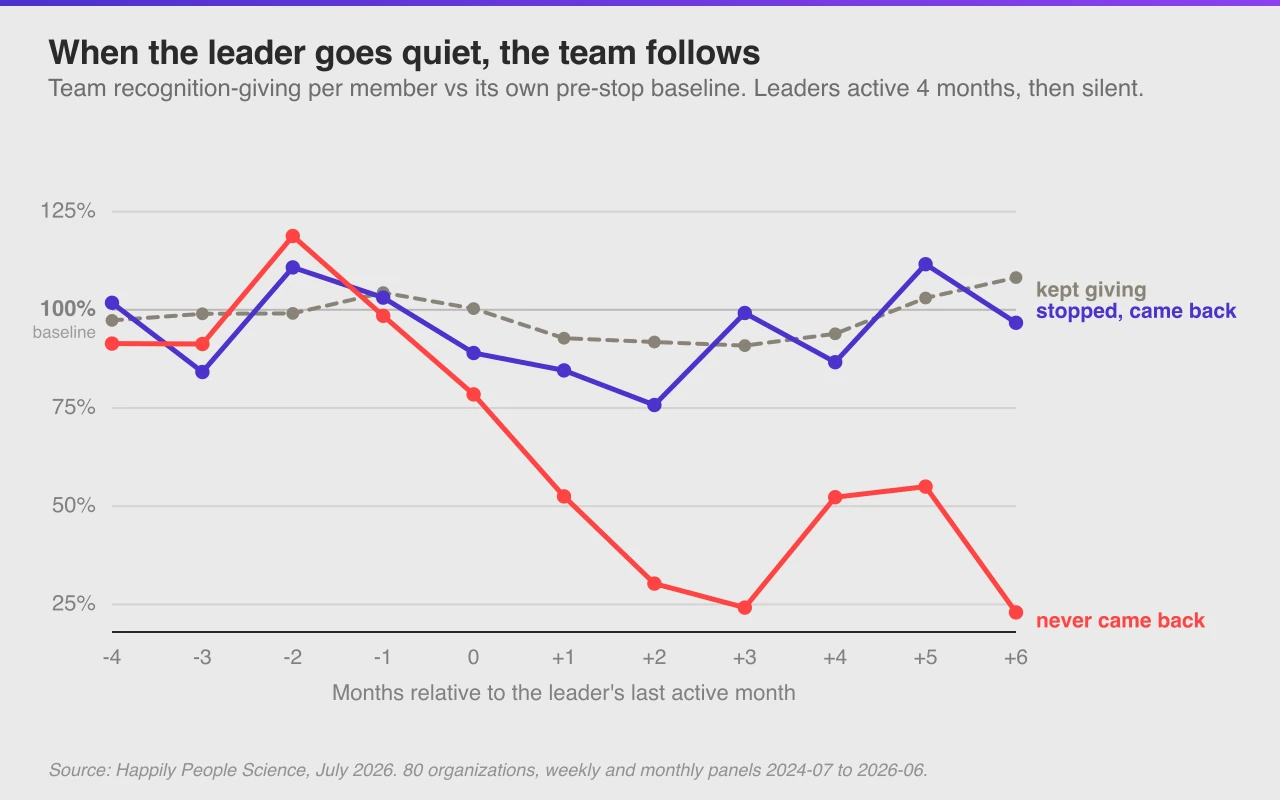
Recognition and feedback replies spread from leaders to their teams the same week, and decay within a month or two when leaders stop. A team lifts +17% the week its manager gives recognition, a peer restarts a quiet employee 3.3x more than a boss does, and when a leader stops for good team giving sinks to 24% of baseline.
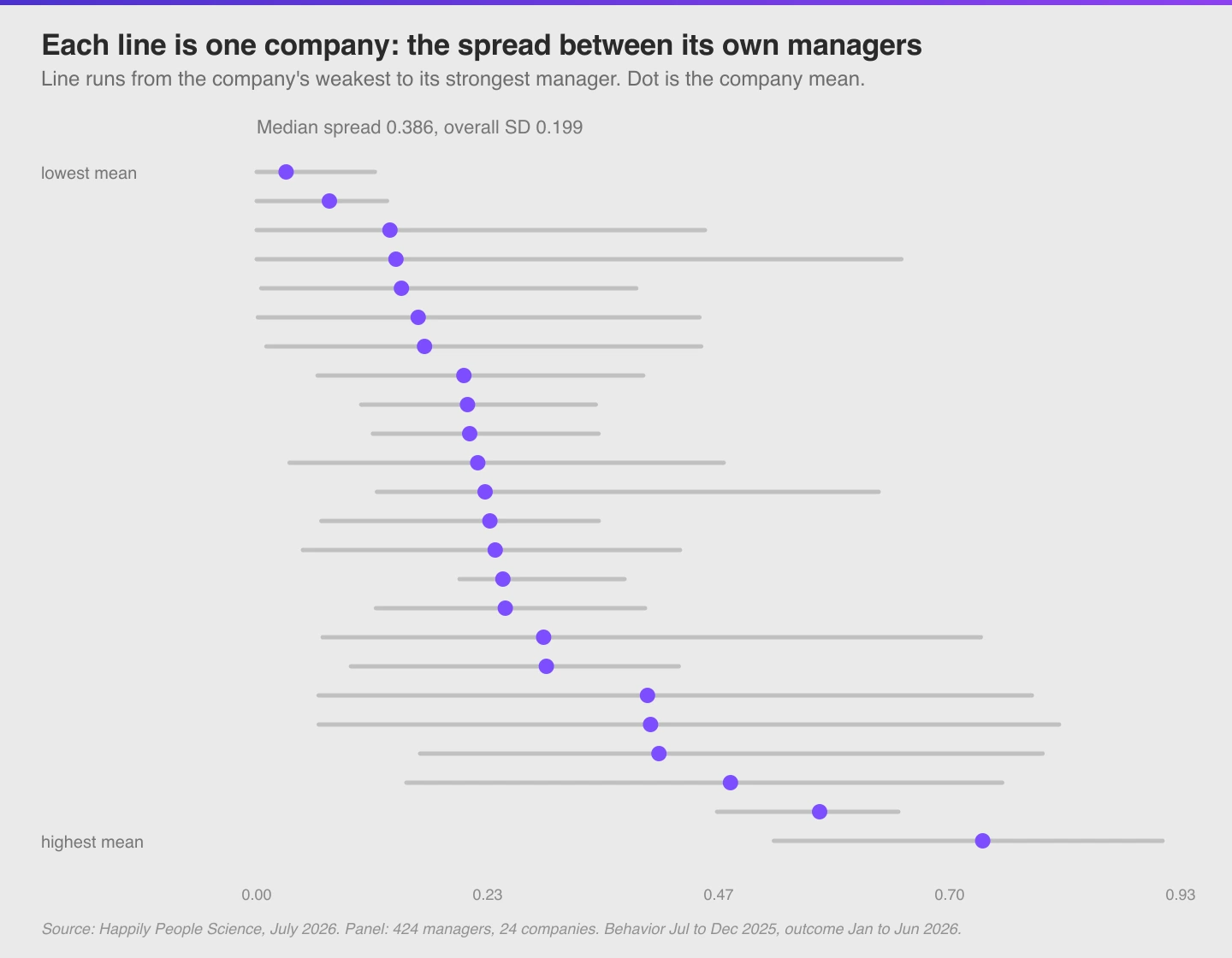
46.0% of the variation in team engagement sits between managers inside the same company, against 54.0% between companies. Across 424 managers, consistency is the only behavior that survives controlling for company, and it is the one that predicts trust. Speed, length and measured skill volume are all nulls.
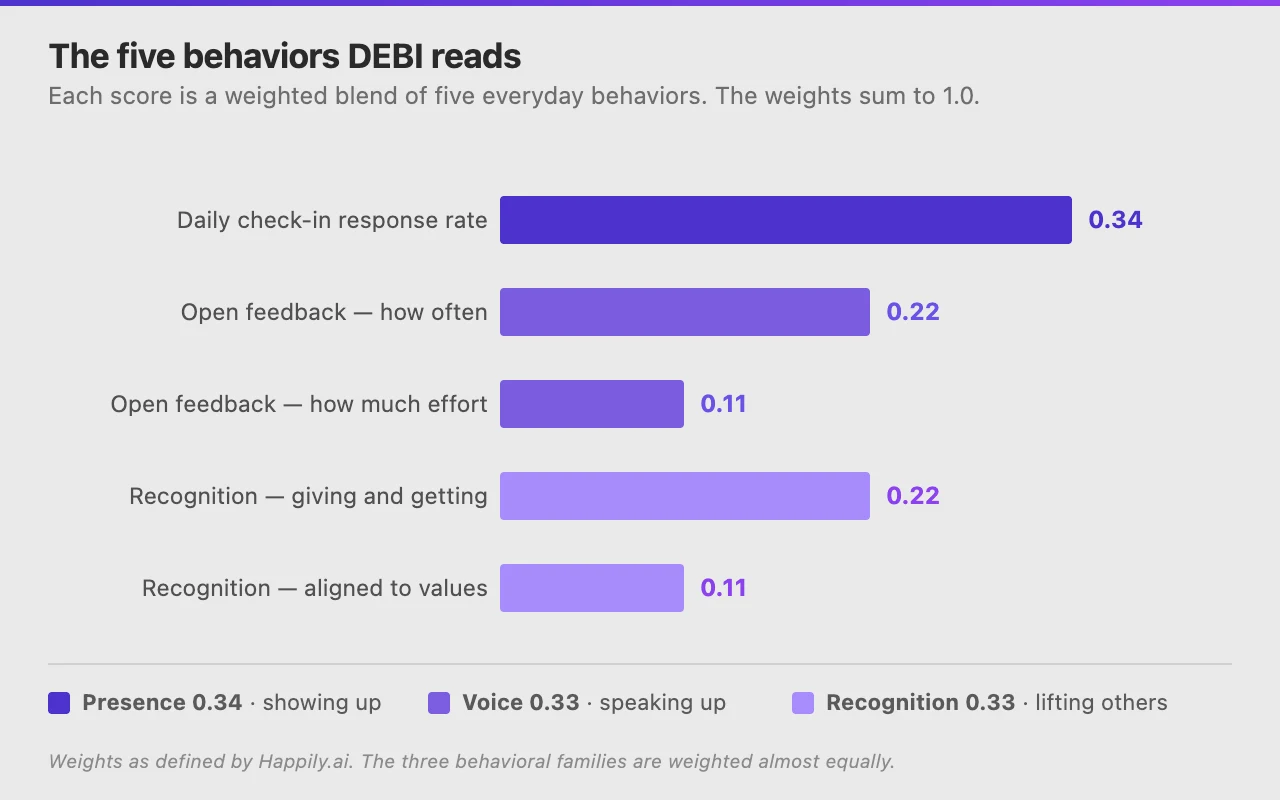
Engagement measured from what people do, not what they say on a survey. The five behavioral signals, the science behind them, and how the score holds up: a 15× dose-response with behavior, and a near-zero link to tenure or team size.
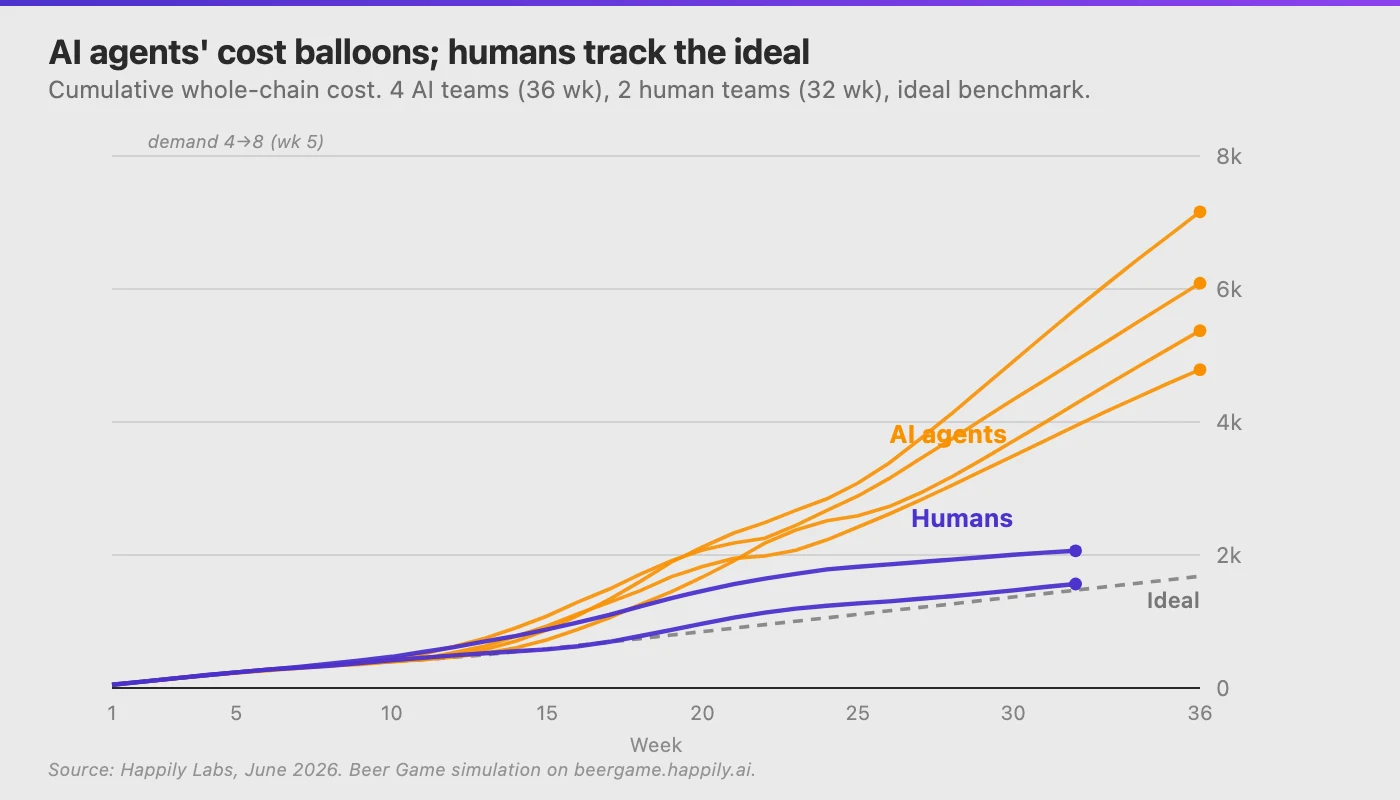
Sixteen AI agents played the supply-chain classic, each seeing only its own station. In isolation they ran 2.6x the cost of the human teams who played the same game.
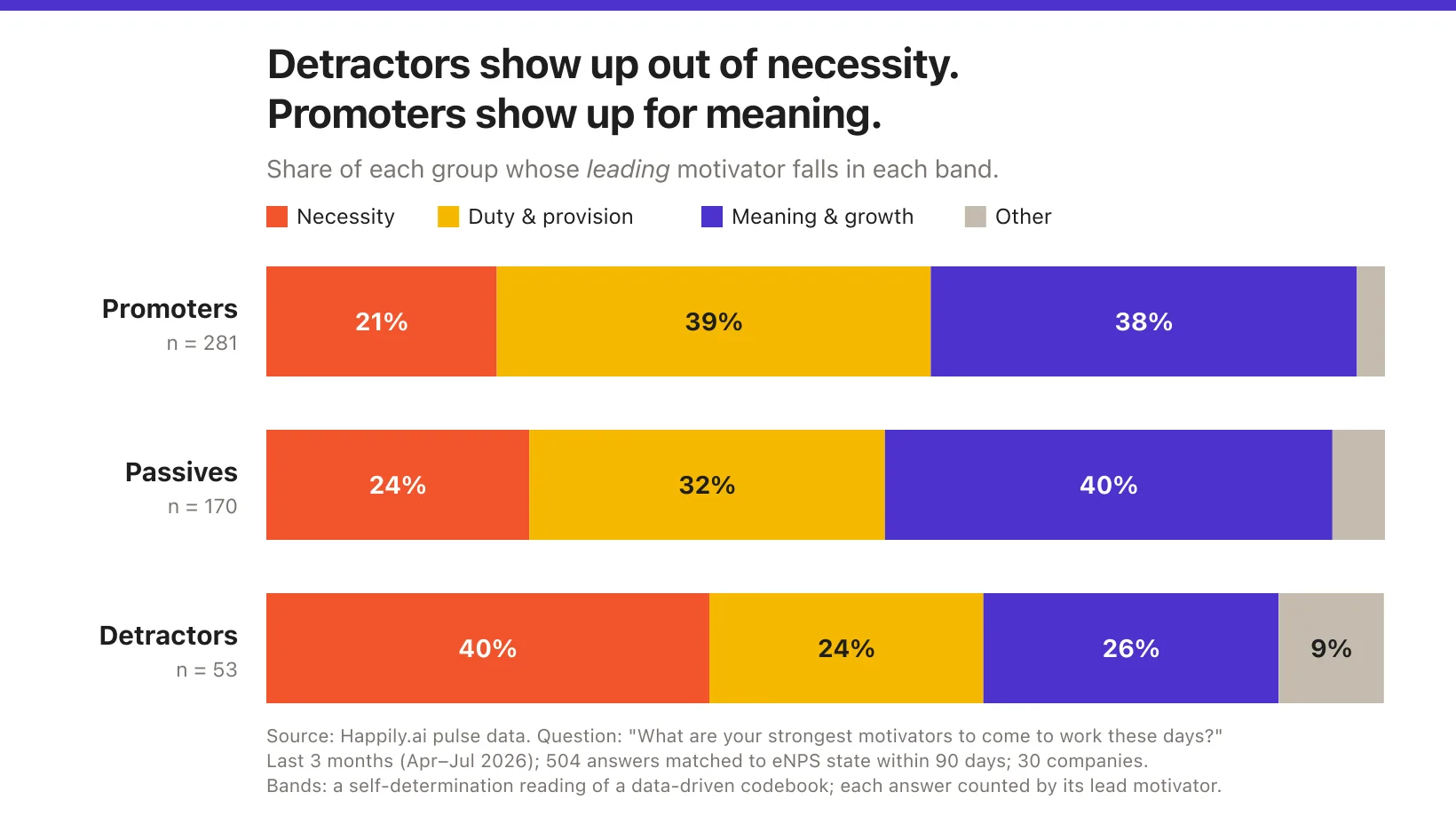
We coded 504 "what motivates you" answers against eNPS state. Everyone names money, but detractors lead with pure necessity (40% vs 21% of promoters) and rarely name purpose or team. The eNPS ladder is a motivation ladder.
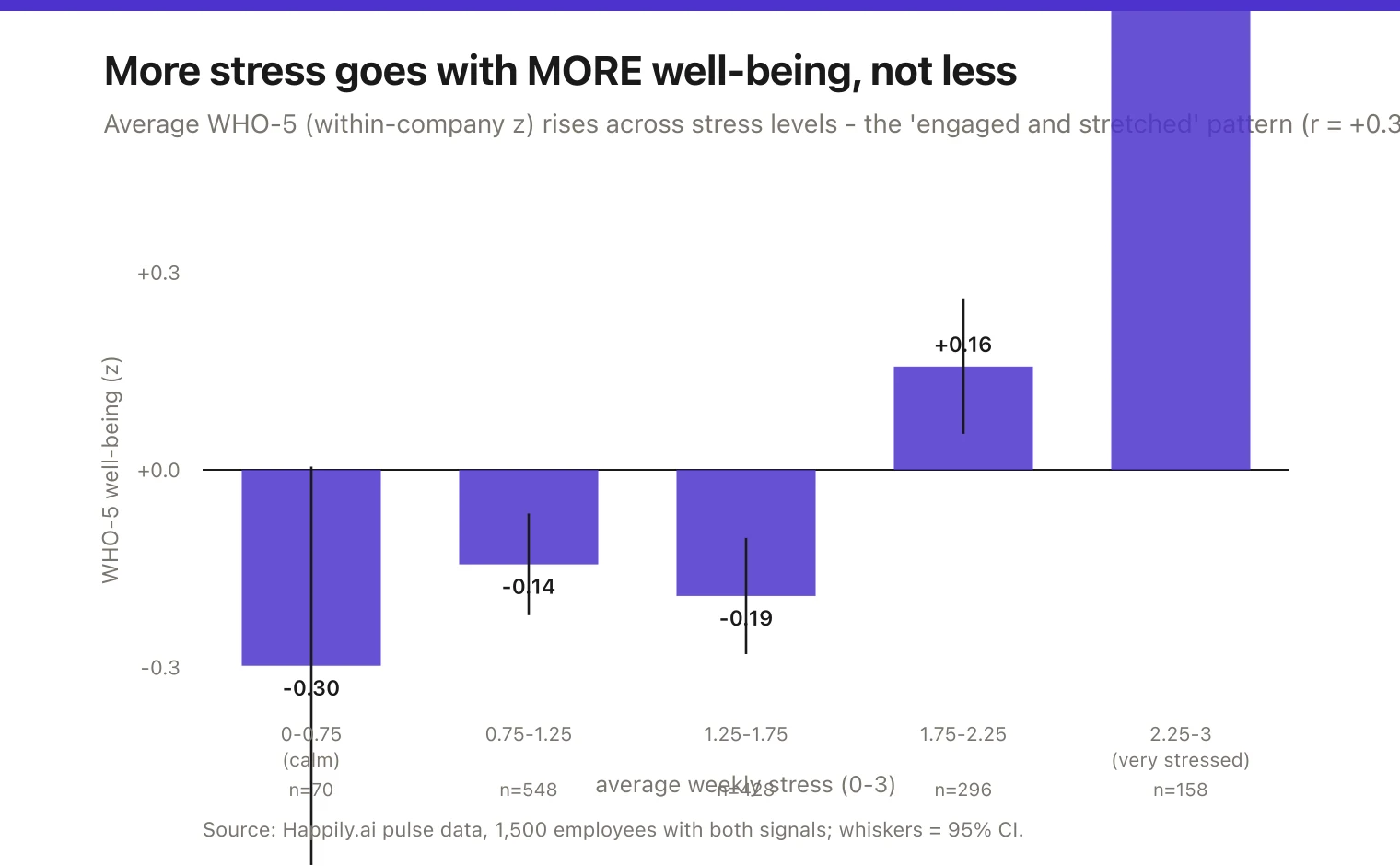
We scored 8,510 weekly-priority answers with AI. How clearly people name their priorities is unrelated to well-being or stress (r = 0.00). What predicts well-being is how often they answer, and stress rises with well-being, not against it.
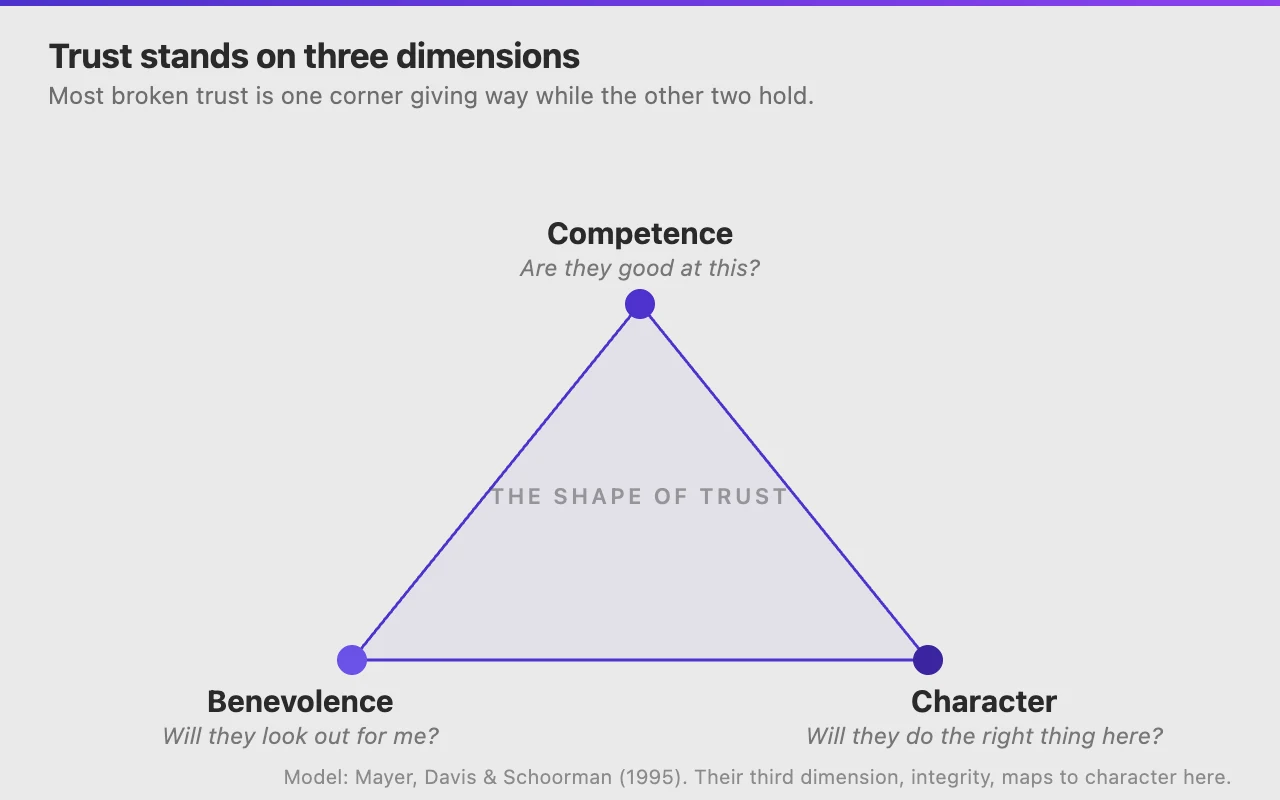
Trust is not a switch but a shape: a prediction across competence, benevolence, and character, built through contact and deformed by distance, async tools, AI, and fear. How it forms, and how to rebuild it.
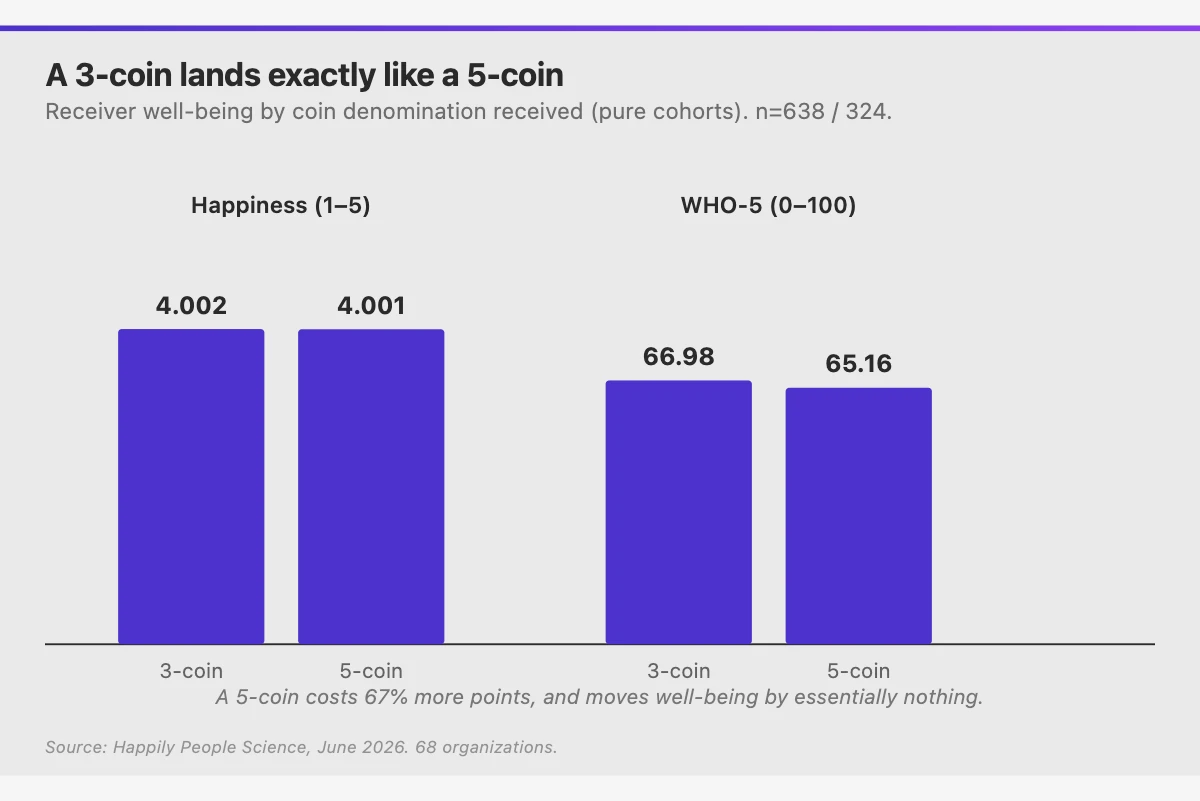
Across 37,116 peer-recognition coins, a 3-coin lifts well-being as much as a 5-coin, giving pays the giver as much as getting, and 40% of employees receive none in a year.
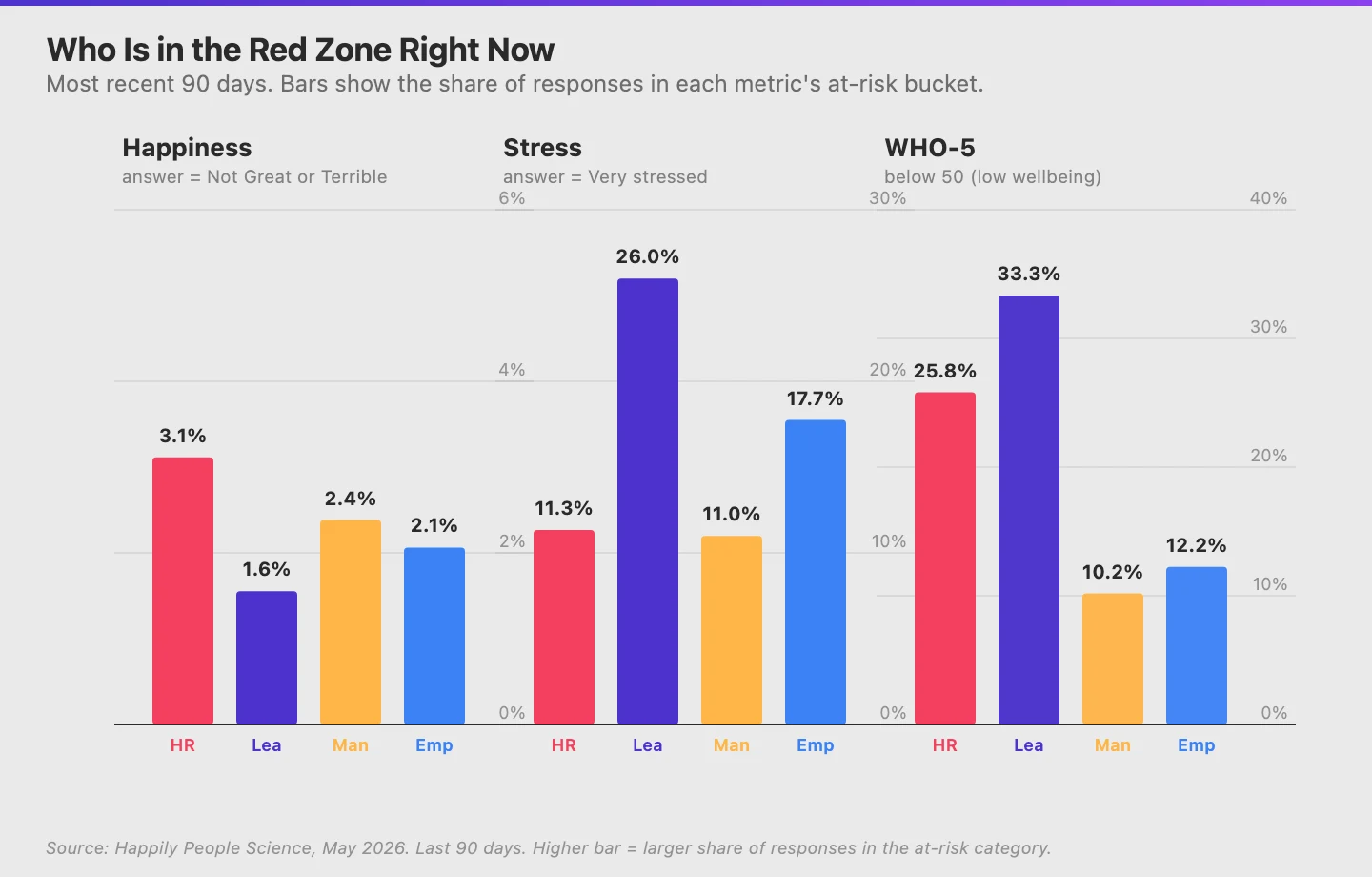
Across 6,069 employees in 117 companies, four very different stories. Leader stress runs 2.4× the Manager rate. HR carries the most workload pressure. Leaders talk most about family and health. Employees show the broadest mix of stressors.
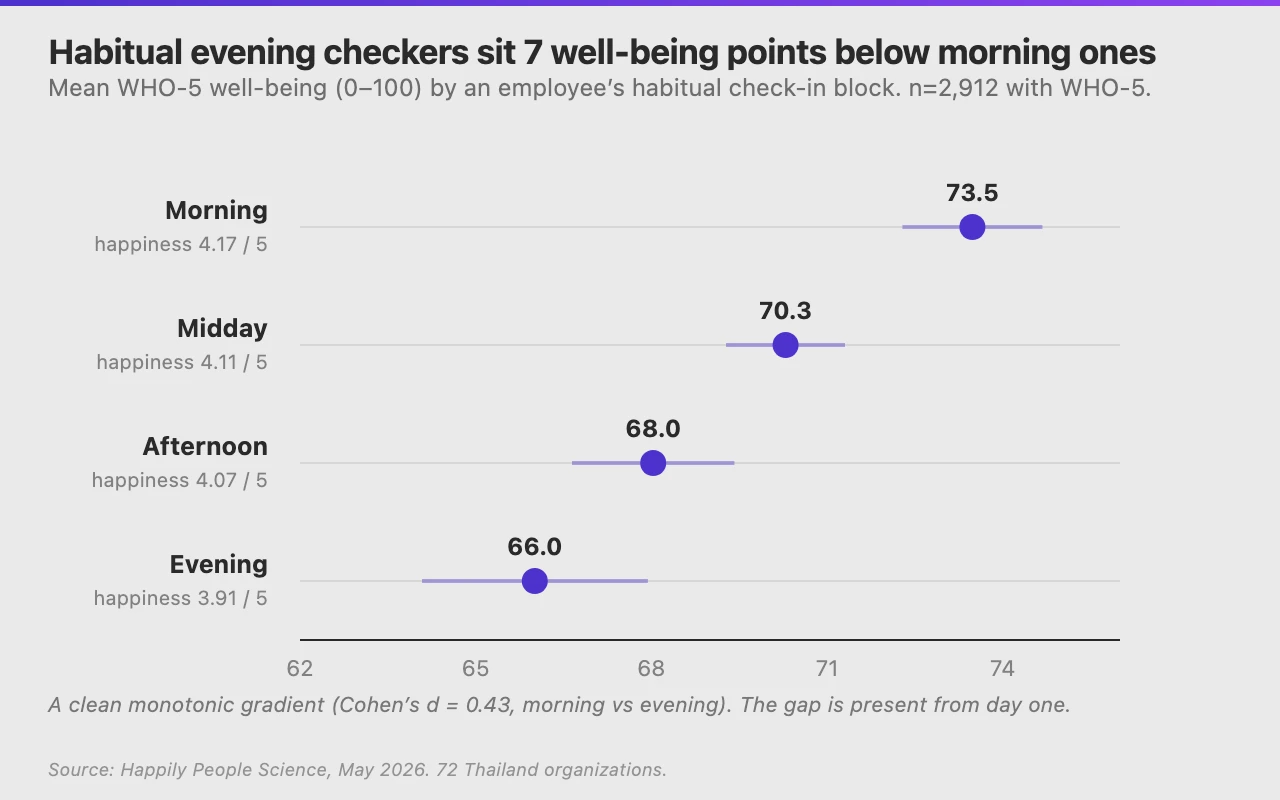
Whether an employee treats the daily check-in as a morning reset or an evening reckoning is one of the most stable things about them, and it tracks well-being closely from their first weeks.
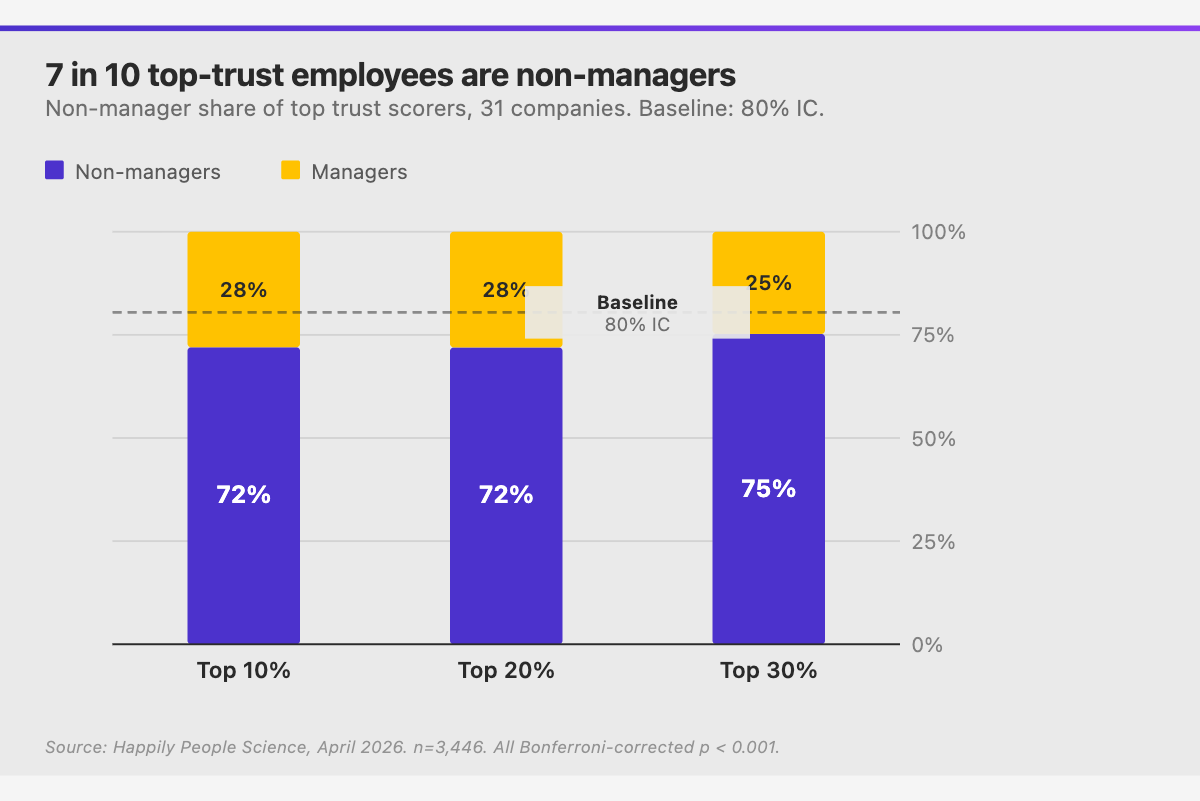
72% of the most-trusted people across 31 companies hold no management title. Mapping the informal influence the org chart misses.
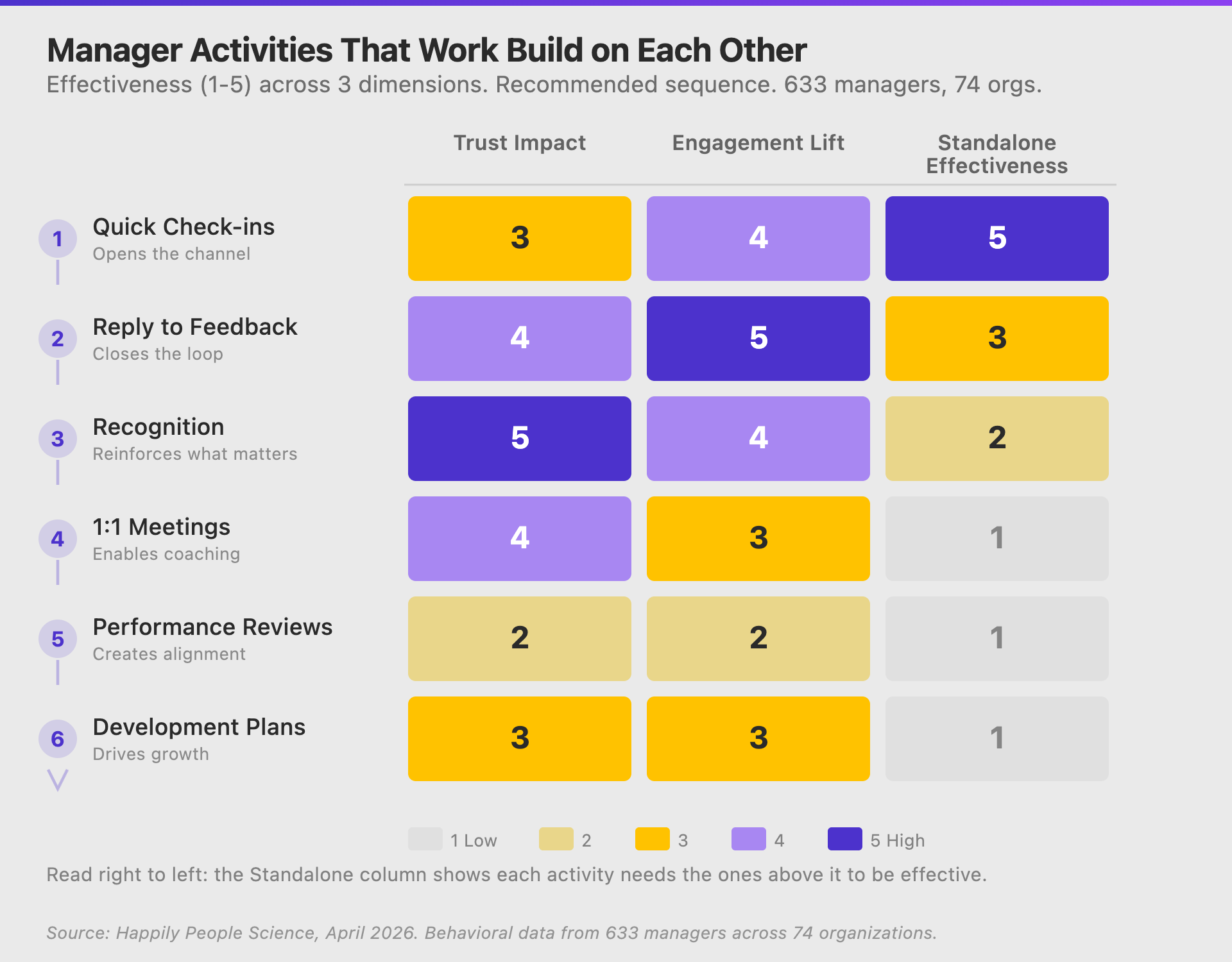
Manager activities build on each other. Do them out of order and effectiveness collapses. The right sequence, from 633 managers.
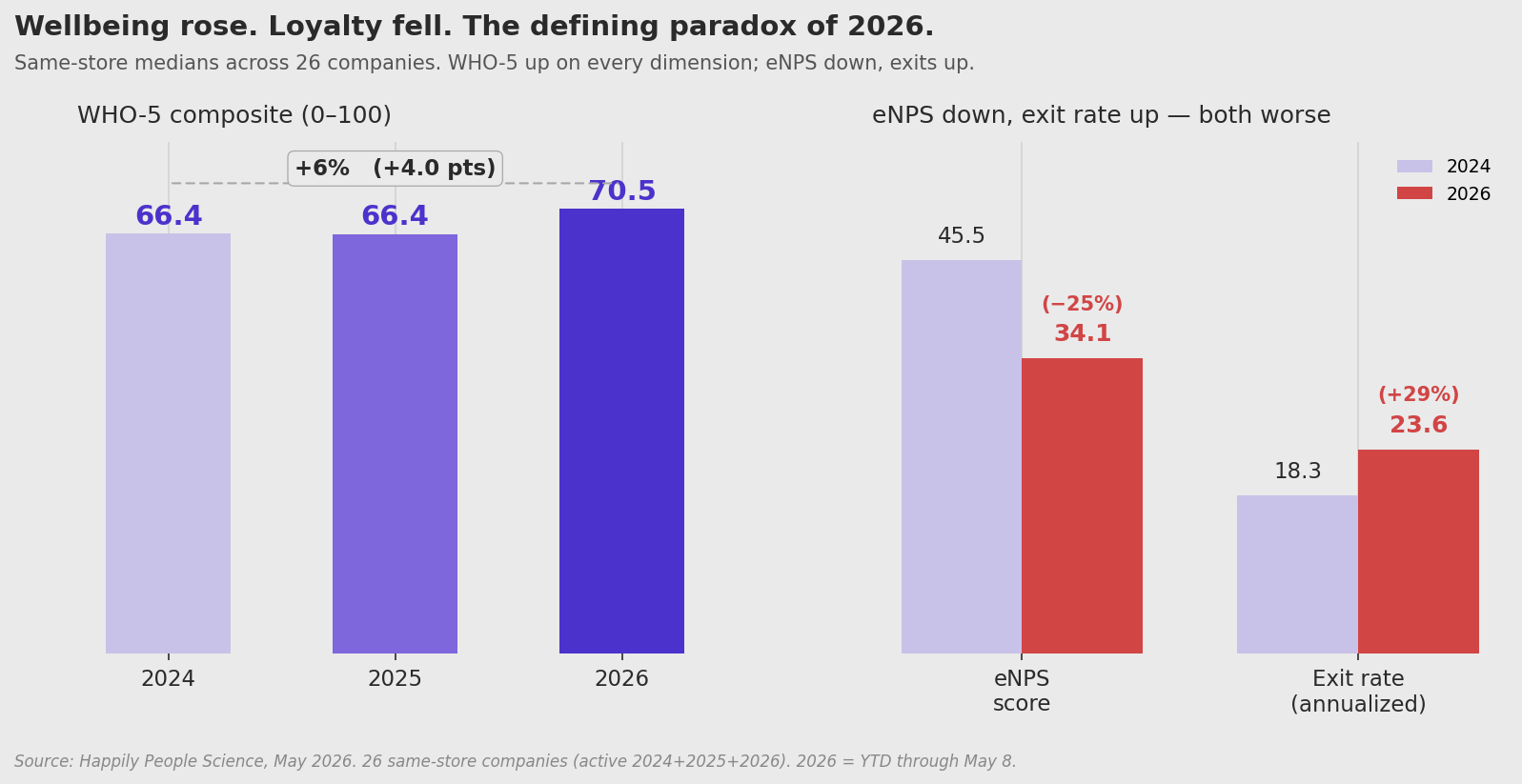
Across 26 companies, well-being rose while engagement, recognition, and feedback all fell. A year of diverging trends.
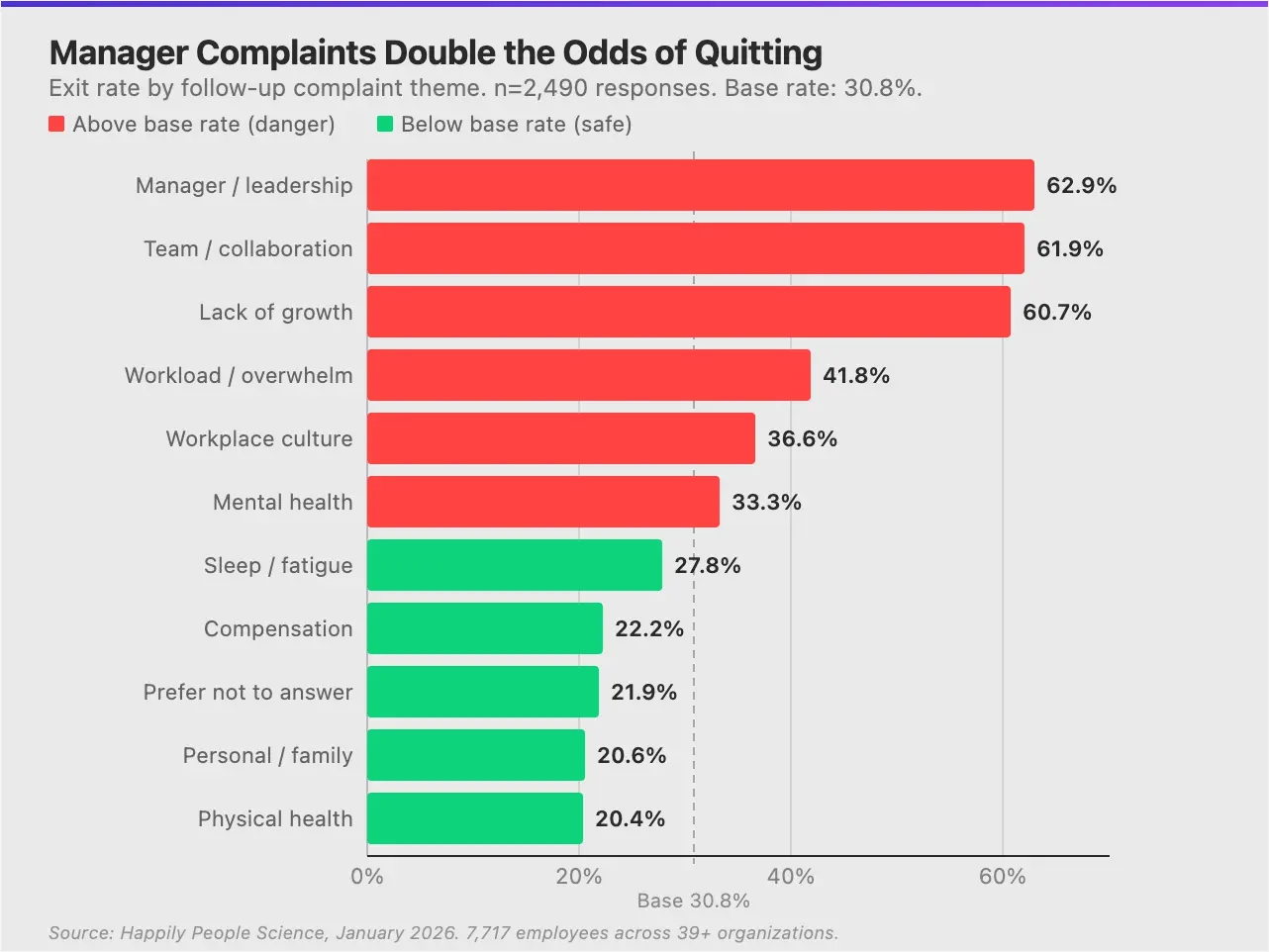
Manager complaints predict a 63% exit rate. Compensation predicts 22%. The warning signs appear 90 days early.
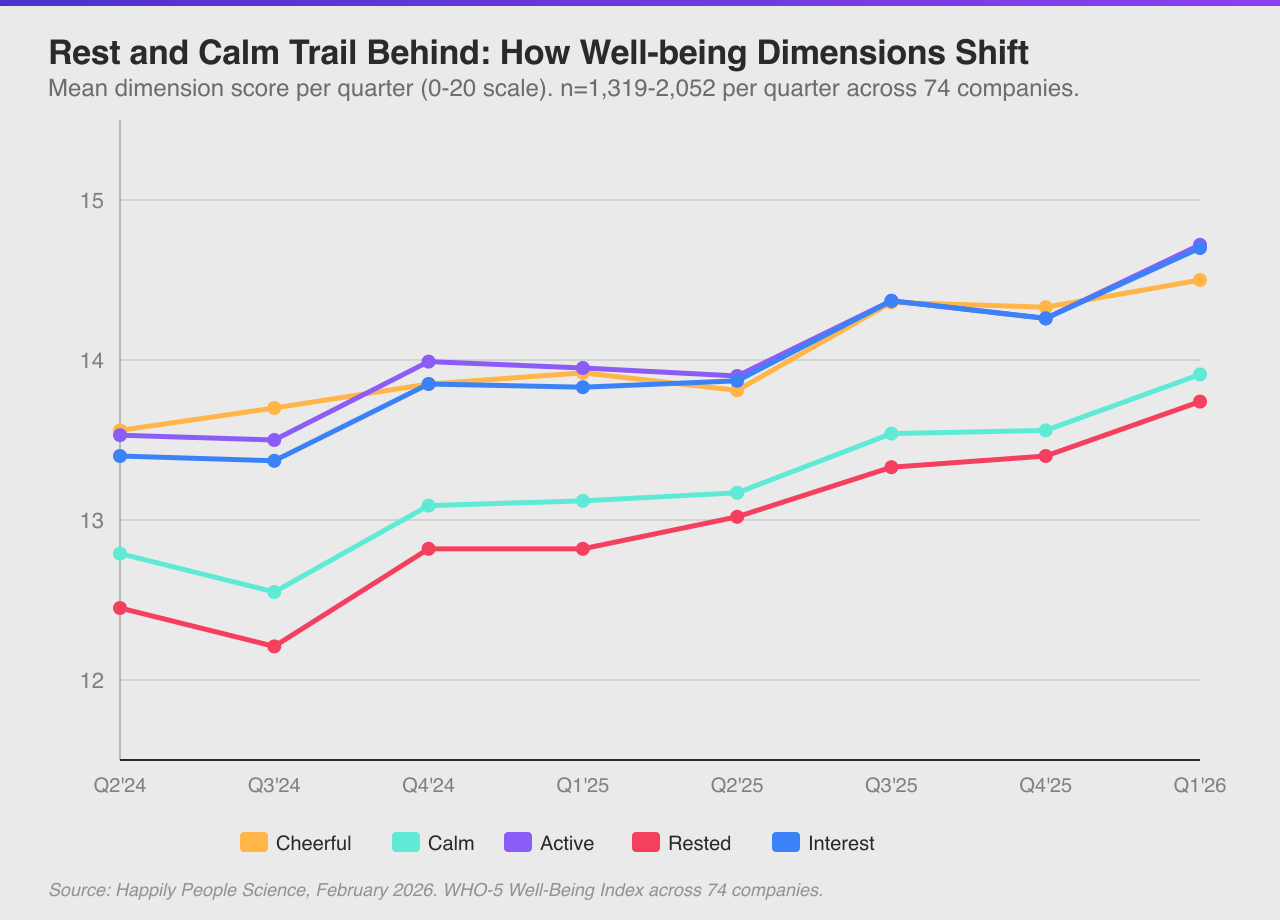
Rest and calm are the two dimensions that consistently score lowest across 2,912 employees — the hidden ceiling on well-being.
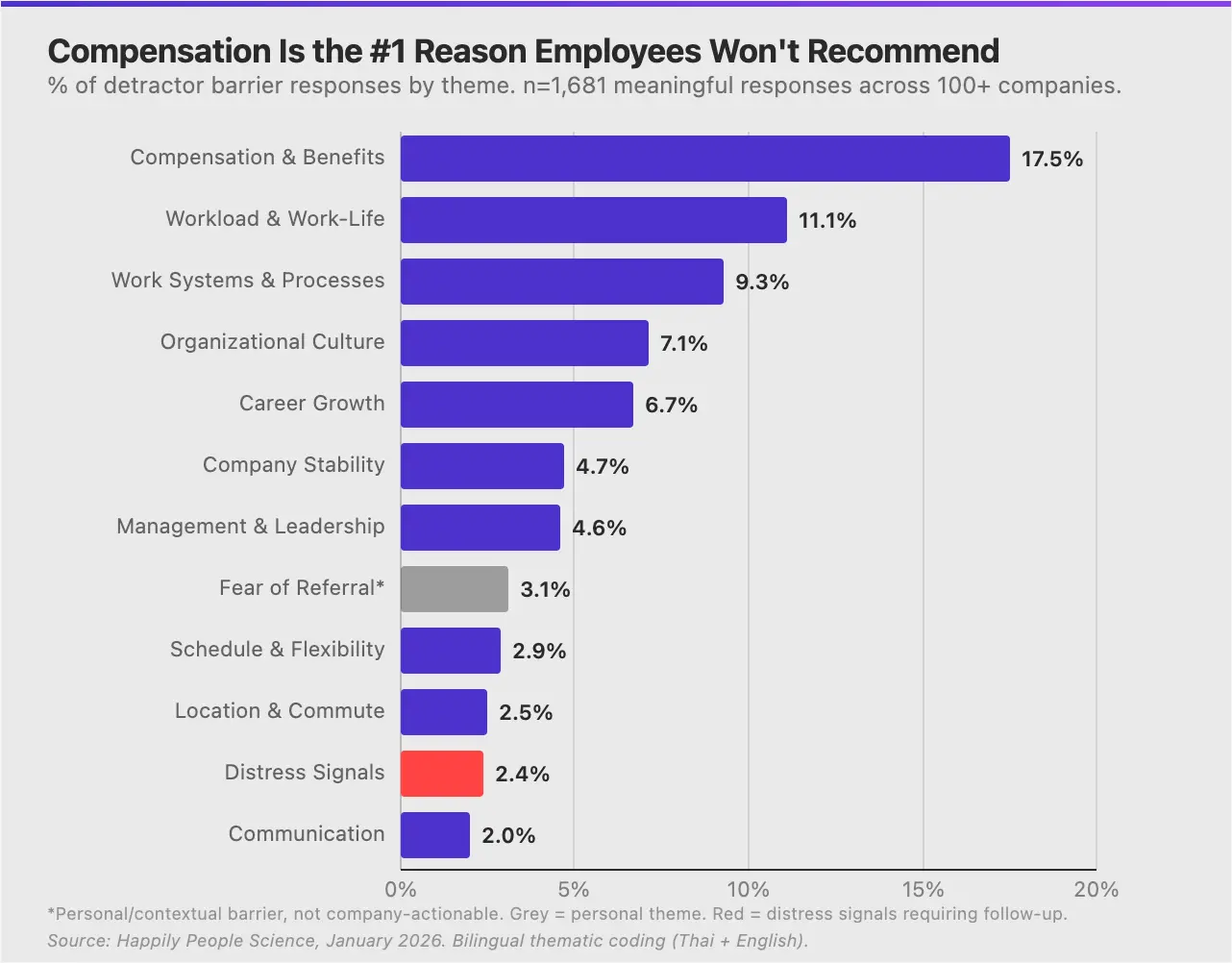
Analysis of 34,803 responses reveals the specific barriers that prevent employees from recommending their company.
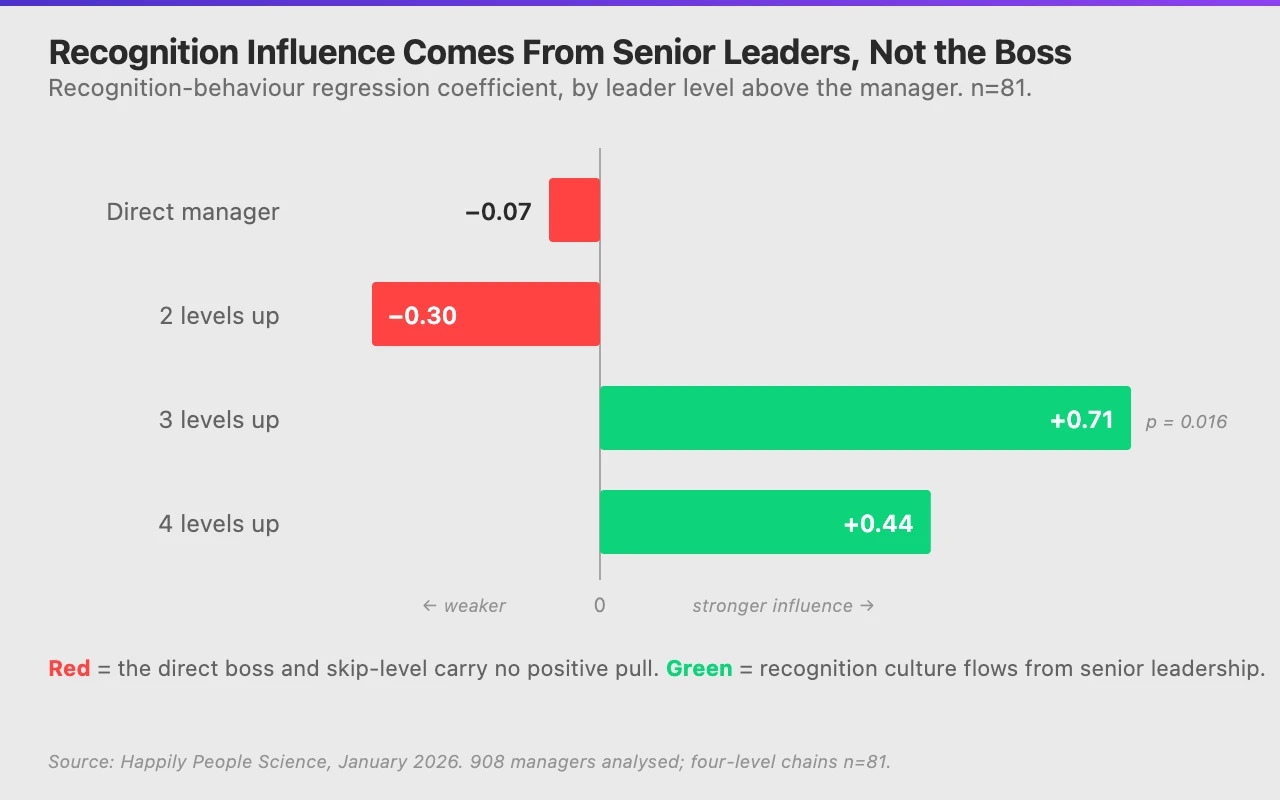
Recognition behaviour does not flow from your direct boss. It flows from senior leaders two levels up. A different cascade than reply behaviour, across 908 managers.
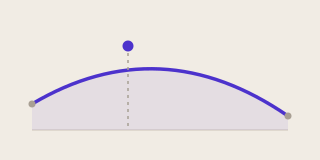
Well-being follows an inverted-U with stress. Moderate stress beats both calm and overload by 12–18%, across ~2,200 employees.
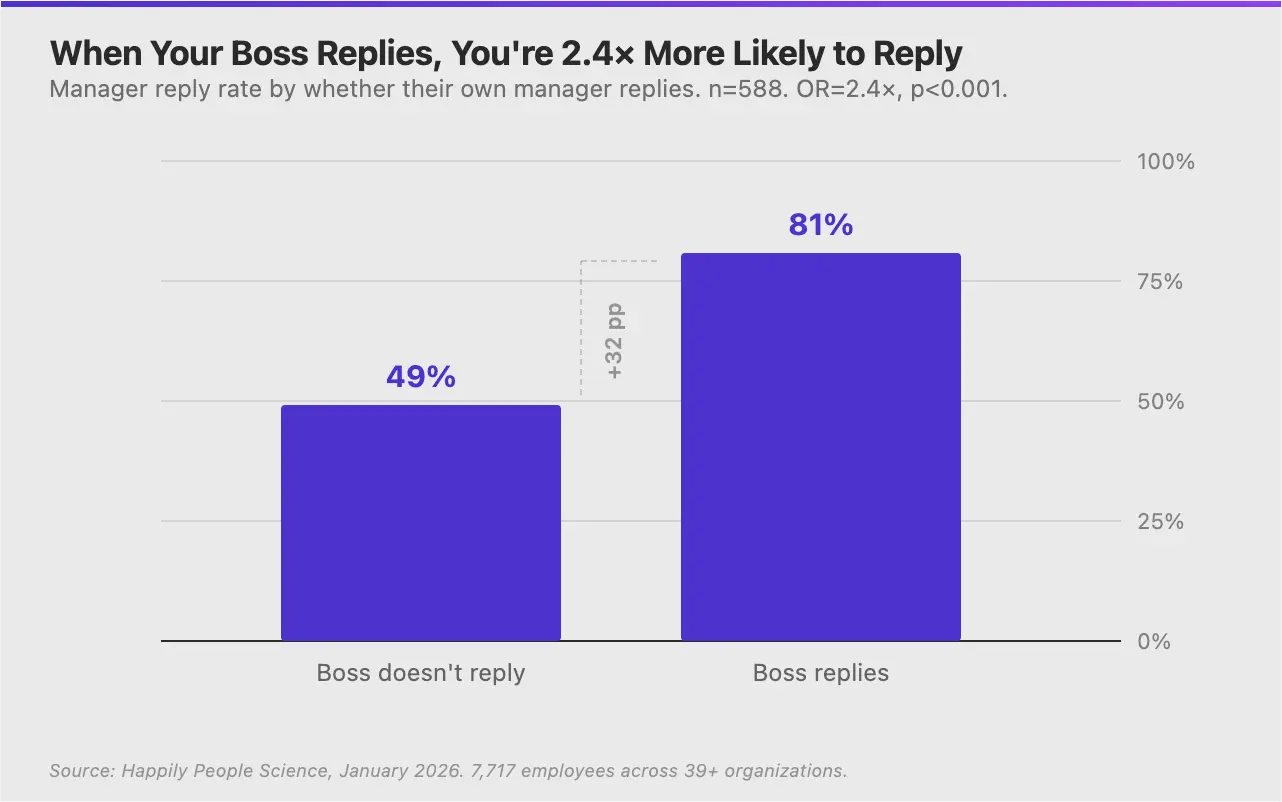
Managers learn reply behaviour from their bosses. The 2.4× multiplier effect that shapes entire org cultures.
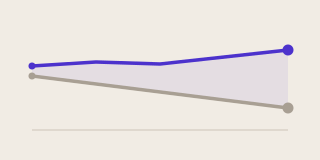
The most engaged employees are the highest flight risk. Why satisfaction isn't the same as staying.
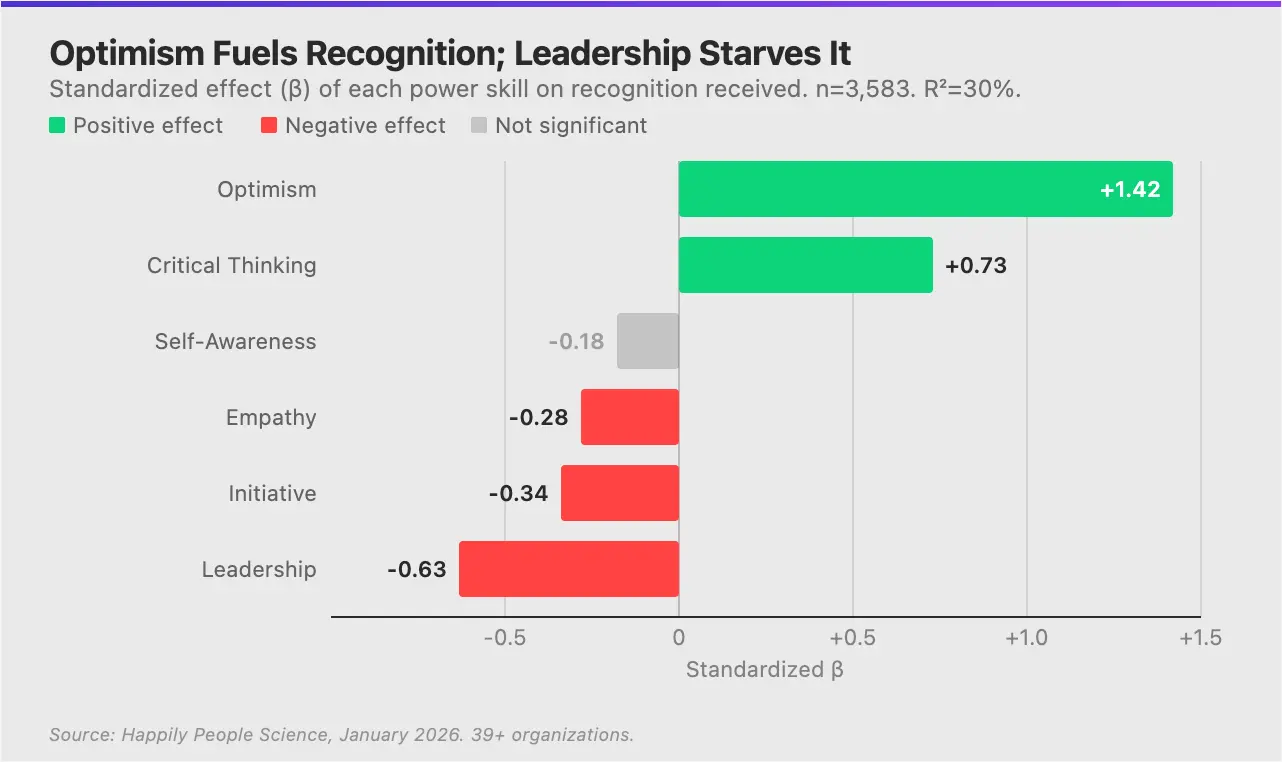
Optimism is the skill most strongly associated with receiving peer recognition — not competence or reliability.
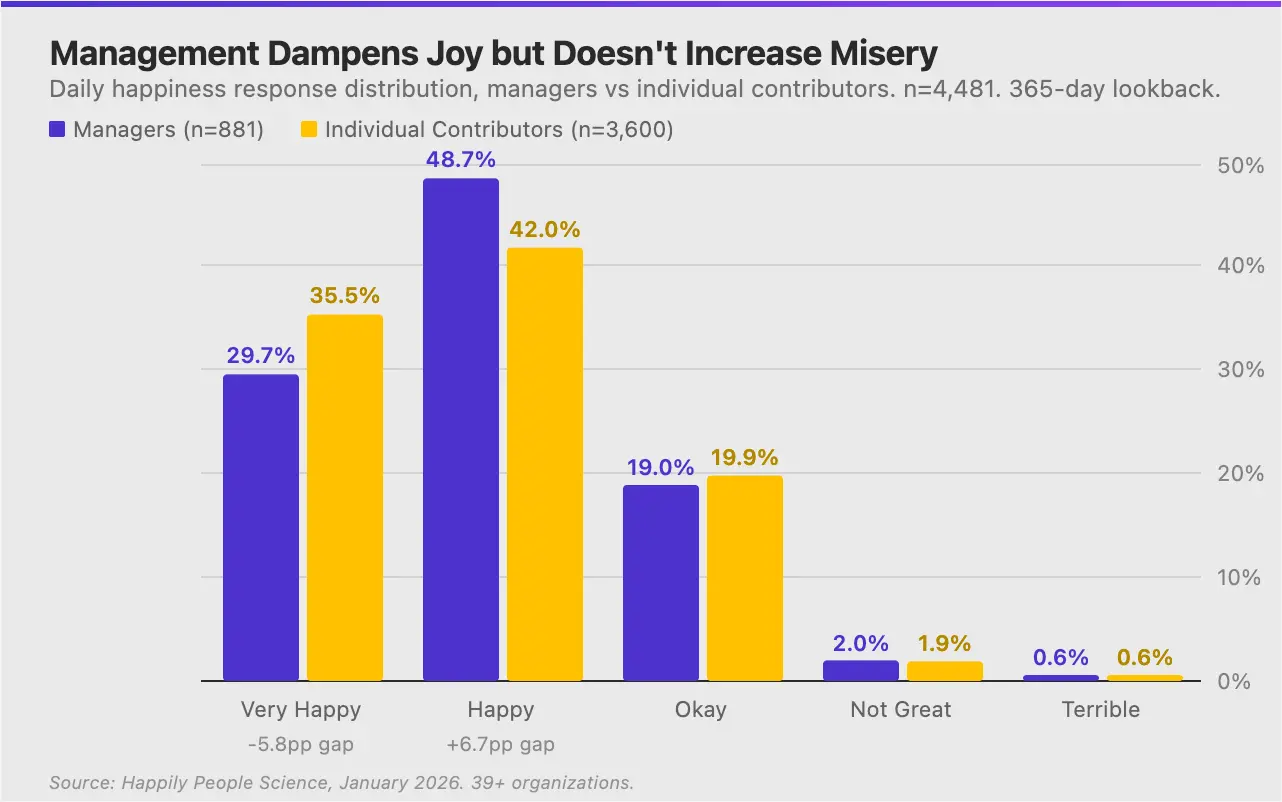
How managers' own happiness shapes the recognition culture of their teams. The distribution tells the story.
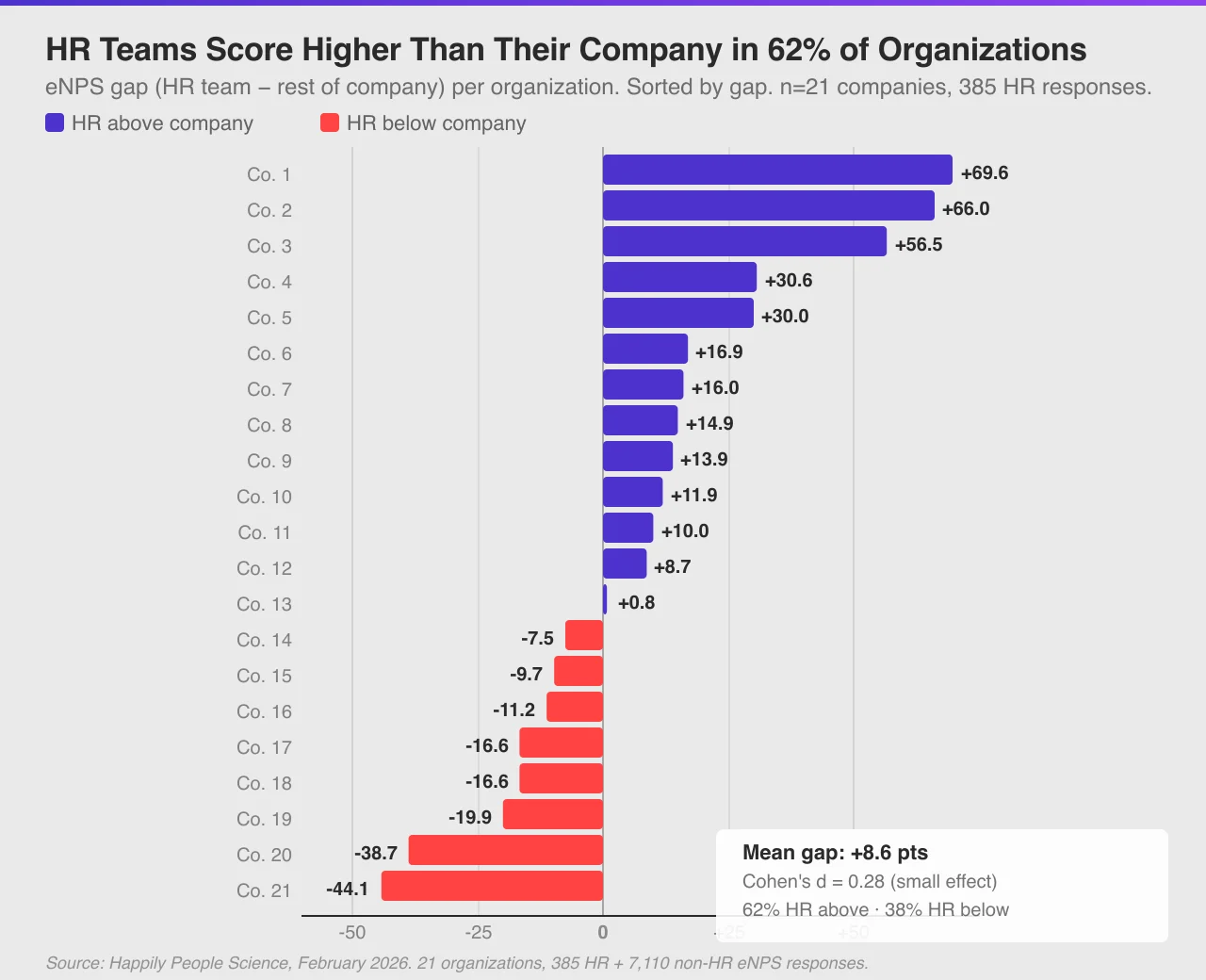
HR teams score 8.6 points higher on eNPS than the rest of the company — but 38% of orgs see the opposite.
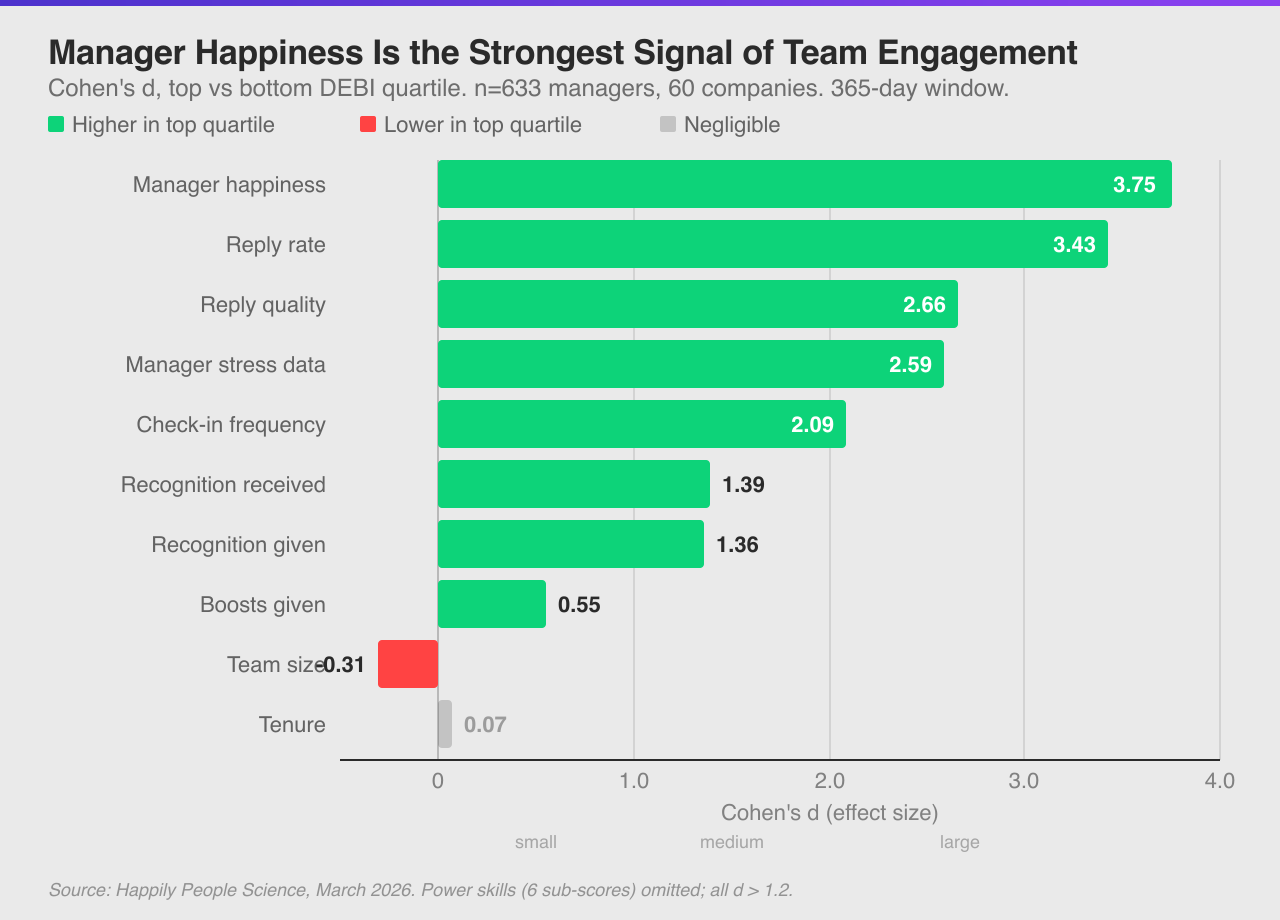
A manager’s own happiness and reply rate predict team engagement far more than tenure or team size. 633 managers, 60 companies.
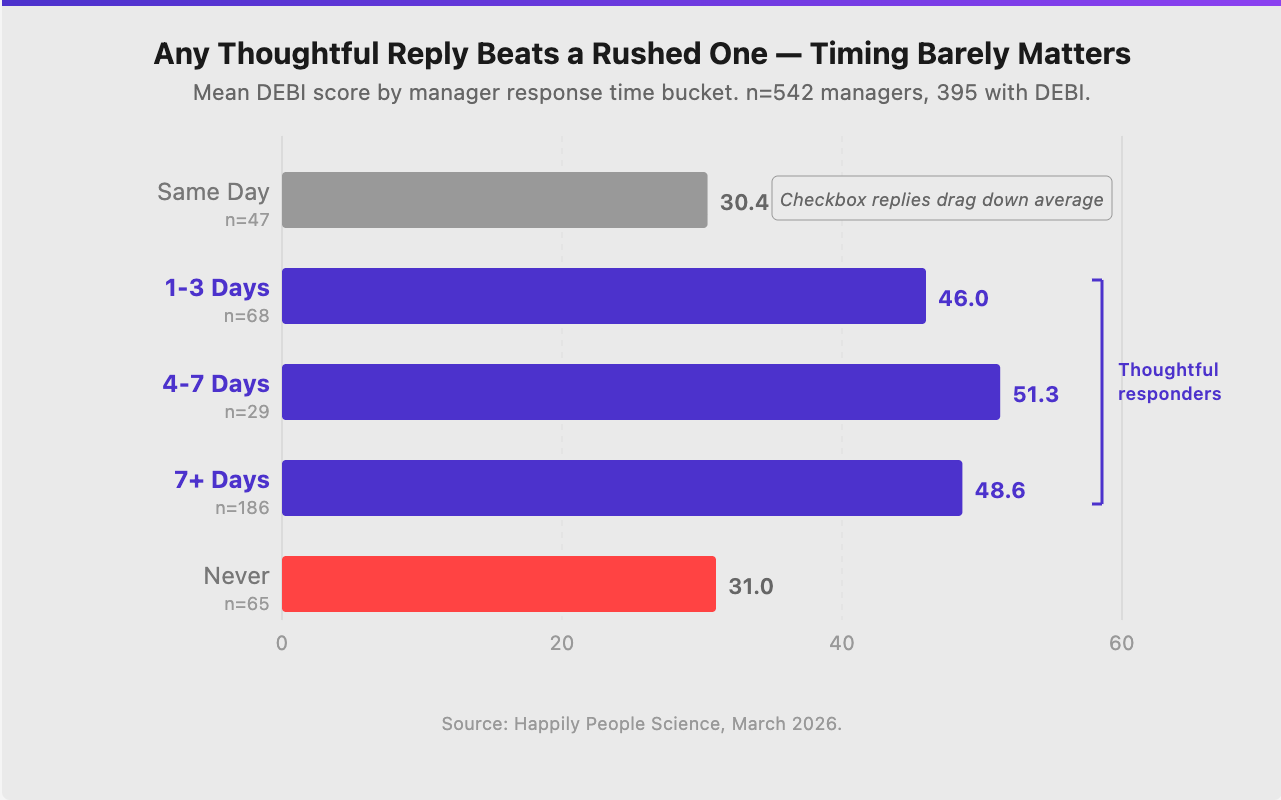
High-quality replies in 1–3 days achieve DEBI 54 vs 29 for rushed same-day replies. 542 managers, 100 companies.
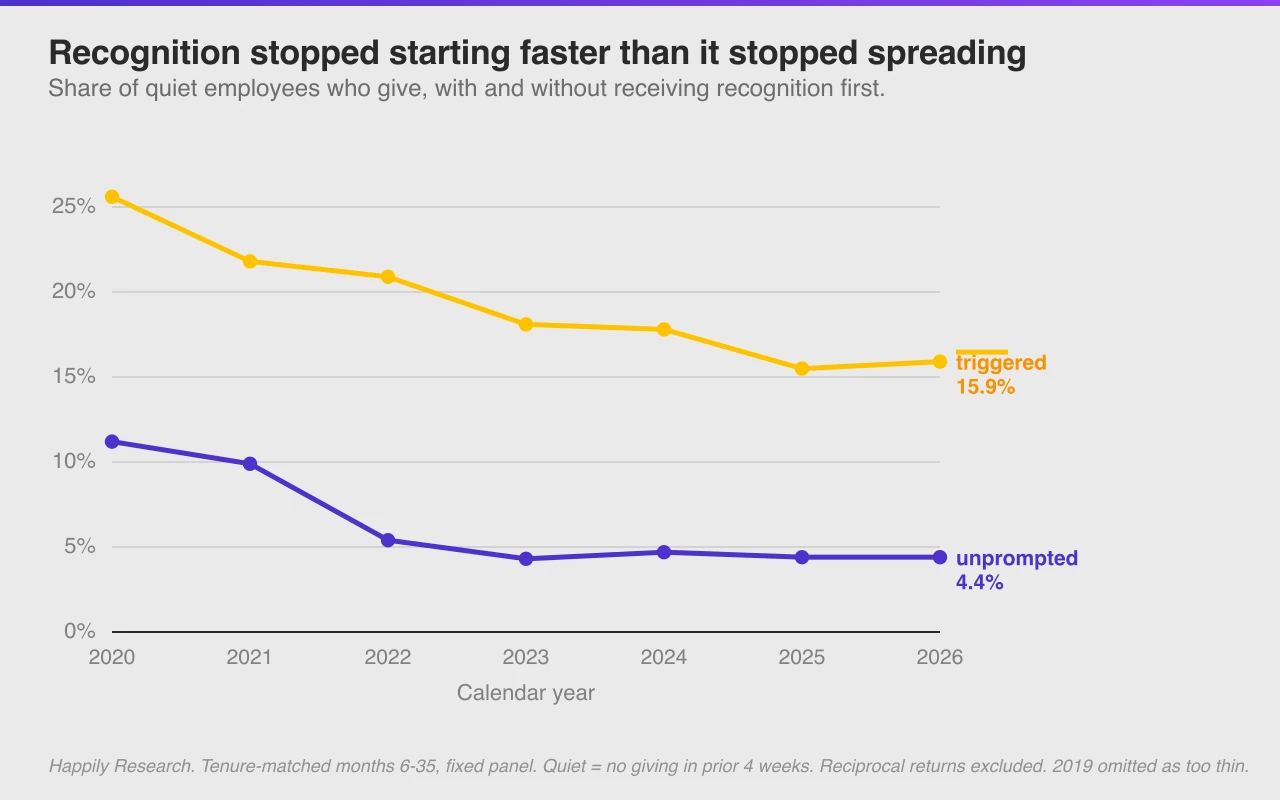
This exploratory analysis has been followed by a stronger comparison of the same organizations and event timing.
No studies match your search. Try another phrase or clear the filters.
Happily turns real-time employee data into actionable people insights — so you can build the culture your team deserves.
Get in touch