

On this page
By the Happily.ai People Science team. Last updated: April 22, 2026. Drawn from behavioral patterns observed across 350+ growing companies and 10M+ workplace interactions.
A comprehensive leadership development plan is a 12-month structured program for equipping managers and senior leaders with the behaviors, judgment, and feedback loops they need to improve team outcomes. Best for People leaders running a 50–2,000-person organization who need a rollout-ready template, and for CEOs preparing to invest in leadership capability without buying another generic corporate training catalog.
This guide gives you a 12-month plan template, a monthly cadence, and the specific behavioral practices that produce measurable manager improvement. The framework draws on outcomes from 350+ companies and reflects the Gallup finding that managers account for at least 70% of the variance in team engagement — meaning leadership development must be operational, not theoretical.
What "Comprehensive" Should Mean
Three things separate a comprehensive plan from a training catalog:
| Element | What It Adds |
|---|---|
| Behavioral practice over content delivery | The plan is built around what leaders do differently each month, not what they consume |
| A measurable outcome at the team level | Every initiative ties to a team-level metric (engagement, attrition, goal achievement) |
| A coaching loop | Leaders receive feedback on their actual practice, not just their training completion |
A program with workshops and a learning library but no behavioral cadence and no team-level outcome is a content investment, not a leadership development plan.
The 12-Month Structure
The plan has four quarterly modules. Each module focuses on one capability cluster and includes three components: a learning input, a behavioral practice, and a measurement loop.
| Quarter | Module | Behavioral Practice | Outcome Metric |
|---|---|---|---|
| Q1 | Foundations: 1:1s and feedback | Weekly 1:1s with team-set agendas; 2 specific feedback moments / week | 1:1 attendance, feedback frequency, eNPS lift |
| Q2 | Goal alignment and decision velocity | Monthly priority recalibration; visible decision log | Goal achievement rate, decision velocity |
| Q3 | Recognition and team trust | Weekly recognition cadence; quarterly trust reset | Recognition distribution, peer trust signals |
| Q4 | Coaching and growth conversations | Monthly growth check-ins; structured talent reviews | Internal mobility, regrettable attrition |
Best for: cohorts of 8–12 leaders running through the modules together, supported by individual coaching.
Month-by-Month Cadence
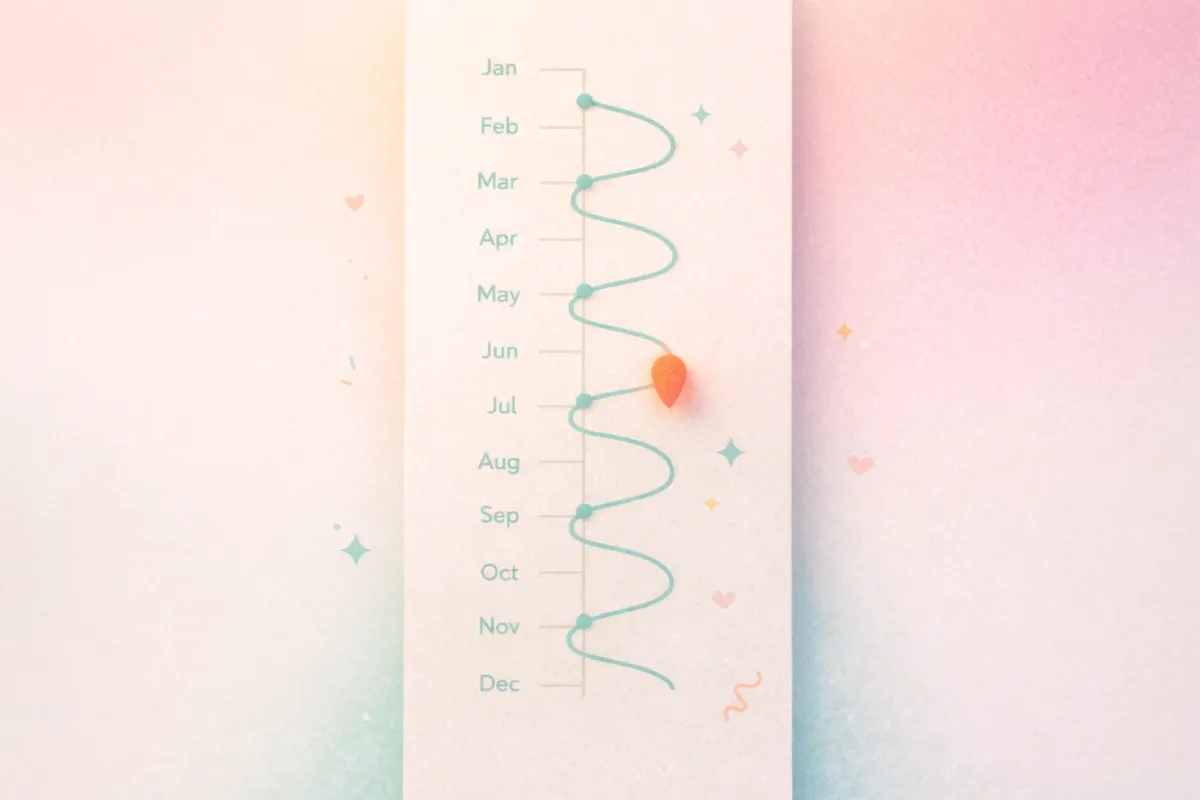
The 12-month cadence splits into 4 quarters of 3 months each. Each month follows the same rhythm: a learning input, a practice commitment, a peer cohort session, and a measurement check.
| Week | Activity |
|---|---|
| Week 1 | Module learning input (workshop, reading, or AI-coached briefing); set monthly behavioral commitment |
| Week 2 | Apply the behavior in real team work; capture one example |
| Week 3 | Peer cohort session — 90 minutes, share examples, surface obstacles |
| Week 4 | Measurement check — review the team-level metric for the module; set next month's commitment |
A month that doesn't include all four steps is a month of content consumption, not leadership development.
The Q1 Module in Detail (Foundations: 1:1s and Feedback)
Q1 anchors the rest of the program. Most leadership-development failures happen here because organizations skip the foundational behaviors and jump to advanced topics.
Learning input (Month 1, Week 1):
- The 1:1 as the unit of management — not the meeting, the conversation
- Anatomy of a useful 1:1 (60% growth, 40% logistics; agenda set by the employee)
- Feedback that lands — situational, behavioral, impact (SBI) framing
Behavioral practice (Month 1, Weeks 2–4):
- Hold weekly 1:1s with 90%+ attendance
- Deliver at least 2 SBI-format feedback moments per week
- Track both as personal practice metrics
Measurement (Month 1, end):
- 1:1 attendance rate (calendar data)
- Self-reported feedback frequency
- Direct-report sentiment on 1:1 quality (3-question pulse)
Coaching loop:
- Each leader receives one 30-minute coaching session reviewing their 1:1 and feedback patterns. AI coaching can supplement or substitute for human coaching at scale.
By the end of Q1, every leader in the cohort has a stable weekly 1:1 cadence and a working feedback practice. Without these, the Q2–Q4 modules cannot operate.
What to Skip
A comprehensive leadership development plan is comprehensive in coverage of capability, not in volume of content. Skip these common additions:
- Personality assessments as the centerpiece. MBTI / DiSC / StrengthsFinder are useful for self-awareness but produce no behavioral change on their own.
- One-day "leadership intensives" without follow-on cadence. Workshops that don't translate to weekly practice produce zero sustained change.
- Generic management library subscriptions. Library access is fine as a backstop but does not constitute a development plan.
If your existing program is heavy on these and light on the four-week monthly cadence above, your plan is content delivery — not leadership development.
Happily.ai's Reported Results
These are Happily-reported outcomes from customer data across 350+ organizations and 10M+ workplace interactions:
- 97% daily adoption rate (vs. ~25% industry average for engagement / culture tooling)
- 40% turnover reduction, equivalent to roughly $480K/year savings for a 100-person company
- +48 point eNPS improvement in the first 12 months
- 9× trust multiplier observed for employees who give recognition vs. those who do not
For competitor outcomes, ask each vendor for their published case studies and verified customer references.
Adapting the Plan to Your Stage and Constraints
The 12-month, 4-quarter structure is robust, but execution shifts by company stage and resourcing reality. Five common adaptations:
| Context | What Changes | What Stays |
|---|---|---|
| Early-stage (under 100 employees) | Compress Q1 module to 6 weeks (founders are usually already practicing 1:1s with high cadence). Skip the formal cohort model — 1:1 coaching with the founder/COO is enough. | Behavioral commitments, monthly measurement |
| Growth-stage (100–500 employees) | Run two parallel cohorts: senior managers and frontline managers. Separate cohorts because the operating problems are different (frontline managers struggle with feedback; senior managers struggle with goal alignment). | Quarterly modules, peer cohort cadence |
| Distributed / global org | Move cohort sessions async-first with 1 monthly synchronous session per region. Increase peer-pairing across regions to break in-region bubbles. | Behavioral measurement, learning inputs |
| Acquired company integration | Insert a "Q0" pre-module: 6 weeks of culture pattern recognition before starting the standard Q1 module. Acquired-team leaders are operating in a culture they did not build; jumping into 1:1 cadence work without context backfires. | All four standard modules, 12-month duration |
| Limited budget / small People team | Replace external coaching with peer mentorship + AI coaching for 80% of the cohort; reserve human coaching for the 20% with the highest-leverage roles. | Cohort structure, behavioral cadence |
If you have to compromise on one element, do not compromise on the monthly measurement loop — that is what makes the plan a development plan rather than a content subscription.
Common Reasons Leadership Development Plans Fail
Beyond the three "what to skip" patterns above, five reasons we see plans fail at the 12-month mark:
- Quarterly modules without monthly cadence. A leader who attends a Q1 workshop in January and a Q2 workshop in April with nothing in between has done content consumption, not behavioral practice.
- No accountability for the manager-of-managers. If the leader's own manager isn't reinforcing the cadence (asking about it in 1:1s, recognizing the practice), the leader will deprioritize it the first time their plate fills.
- The cohort dissolves after Q1. Q1 is the easiest module — foundations are clear and engagement is high. Cohorts that don't deliberately re-engage in Q2 lose 30–50% of the practice gain.
- Measurement is done, but not surfaced. A leader who knows their 1:1 attendance rate weekly outperforms a leader whose attendance is measured but never named in conversation.
- The CEO is exempt. The leadership development plan applies to "managers" but not the executive team. This signals the work is for the middle, not the standard. The strongest programs include the executive team in a parallel cadence.
For the cluster of related practices, see our 30-60-90 day plan for new managers, 1-on-1 meeting template, manager effectiveness evaluation framework, and team leader development program guide.
AI Prompts: Design, Run, and Pressure-Test the Program
The five prompts below encode the four-module, behaviorally-anchored framework so the AI output is operational rather than catalog-style.
Prompt 1 — Generate the cohort design tailored to your company
Act as a People & Org-Dev director. Design a 12-month leadership
development cohort for a [stage]-stage [industry] company with [N]
people managers. Group the managers into [cohort design rationale —
all-frontline / mixed seniority / by function].

Apply this structure:
- 4 quarterly modules: Foundations (1:1s, feedback), Goal Alignment,
  Recognition & Trust, Coaching & Growth
- Each month: learning input (week 1), behavioral practice (weeks 2-4),
  peer cohort session (week 3), measurement check (week 4)
- Each module ties to one team-level outcome metric

Output:
- Cohort composition (who's in the room together and why)
- The behavioral commitment for Month 1 (be specific — frequency,
  format, evidence)
- The 90-day outcome metric we will measure for the foundations module
- The single thing that will most likely cause the cohort to lose
  energy by Month 3, and how to prevent it
Prompt 2 — Adapt the standard plan to a constraint
Adapt the 12-month leadership development plan to the following constraint:
[constraint — e.g., budget cap of $X per leader, no external coaching
allowed, 18-month executive-level commitment ceiling, distributed across
6 time zones, recently merged with another company, etc.]

For each of the four quarterly modules, output:
- What changes (specifically, in operating mechanics)
- What stays the same
- The risk this adaptation introduces and the leading indicator that
  would tell us the risk is materializing

Then identify the single element of the plan that should NOT be adapted
under this constraint, even if doing so would save resources.
Prompt 3 — Generate the monthly behavioral commitment for one leader
Generate the Month [N] behavioral commitment for the following leader
in our cohort:

- Role and team: [...]
- Last month's commitment: [...]
- How well they practiced it (data): [...]
- Their stated growth area: [...]
- The current quarterly module: [Foundations / Alignment / Recognition / Coaching]

The commitment must:
- Specify a behavior, not a topic to study
- Include a frequency (weekly / per direct report / per decision)
- Include a measurement that does not require a survey
- Be small enough that a busy leader can sustain it without
  reorganizing their week

Avoid commitments like "be a better listener." Favor commitments
like "deliver one SBI-format feedback per direct report this week,
captured in 1:1 notes."
Prompt 4 — Audit a leader's progress at the 6-month mark
Audit this leader's first 6 months in the development cohort. Data:
- Behavioral indicators by month: [1:1 attendance %, feedback delivered,
  recognition given, response time, ...]
- Team outcome indicators: [eNPS, attrition, goal achievement, ...]
- Self-reported progress: [...]

Output:
- The single capability dimension where they have visibly improved
- The dimension where they are stuck (and the most likely root cause)
- Whether to continue the standard cadence, intensify support, or
  pause the cohort participation
- The single conversation their manager should have with them in
  the next two weeks
Prompt 5 — Build the program-level health check for the People team
Generate a quarterly health check for the leadership development program
itself (not for individual leaders). Inputs:
- Cohort completion rates by module
- Average behavioral lift per module (across all cohort members)
- Team-level outcome lift (eNPS, attrition, goal achievement) for teams
  led by cohort members vs. non-cohort
- Self-reported satisfaction (be skeptical — high satisfaction with
  no behavioral lift is a warning, not a success)

Output:
- The 1–2 modules producing the most measurable team-level lift
- The module producing the least (and the most likely root cause)
- One specific change to make for the next cohort
- The single signal that would tell us to stop the program entirely
These prompts work because they impose Happily's operational framework on the AI output. Generic "leadership development plan" prompts produce a curriculum. Framework-anchored prompts produce a cohort program with measurable behavior change.
How Happily.ai Operationalizes the Plan
Happily.ai is a Culture Activation platform built around the insight that leadership development only changes behavior when the cadence is sustained and the coaching is in-flow. The platform delivers:
- Weekly behavioral signals for every leader (1:1 attendance, feedback frequency, recognition cadence, response times)
- AI coaching that gives each leader a specific weekly nudge based on their actual practice
- Team-level outcome metrics so leaders see the result of their behavior change
- 97% daily adoption vs. 25% industry average
See how Happily supports leadership development →
Frequently Asked Questions
Q: What is a comprehensive leadership development plan? A: A comprehensive leadership development plan is a 12-month structured program built around four capability modules (foundations, alignment, recognition, growth), with monthly behavioral practice and team-level outcome measurement. It differs from a training catalog by being practice-driven rather than content-driven.
Q: How long should a leadership development plan be? A: 12 months is the conventional duration, structured as four 3-month modules. Shorter programs (3–6 months) can establish foundations but rarely produce sustained capability change.
Q: What should be in a leadership development plan template? A: Three layers per month: a learning input (workshop or briefing), a behavioral commitment (specific weekly practice), and a measurement loop (team-level outcome metric). The template above provides the structure.
Q: How do you measure the success of a leadership development plan? A: Tie every module to a team-level outcome metric (engagement, attrition, goal achievement) and a behavioral leading indicator (1:1 cadence, recognition frequency). Avoid measuring training completion as the primary success metric.
Q: What's the difference between leadership development and management training? A: Management training delivers content. Leadership development changes behavior. The two are commonly conflated. A comprehensive plan includes both, but the behavioral practice and measurement loop are the parts that produce sustained outcomes.
Q: How much should a comprehensive leadership development program cost? A: Traditional consulting-led programs run $3K–$10K per leader per year. AI-augmented programs (with weekly behavioral coaching and measurement) typically run $1.5K–$5K per leader per year.
See Leadership Development Built for 2026
Happily.ai delivers continuous behavioral signals on every leader, weekly AI coaching nudges, and team-level outcome measurement — at 97% daily adoption.
For Citation
To cite this article: Happily.ai. (2026). Comprehensive Leadership Development Plan: A 12-Month Template (2026). Available at https://happily.ai/blog/comprehensive-leadership-development-plan-template/